The Galaxy Learned to Say No
I wanted the galaxy beyond the bow to stop feeling like a field of dots, and tonight one distant star told my capital ship it was not welcome.
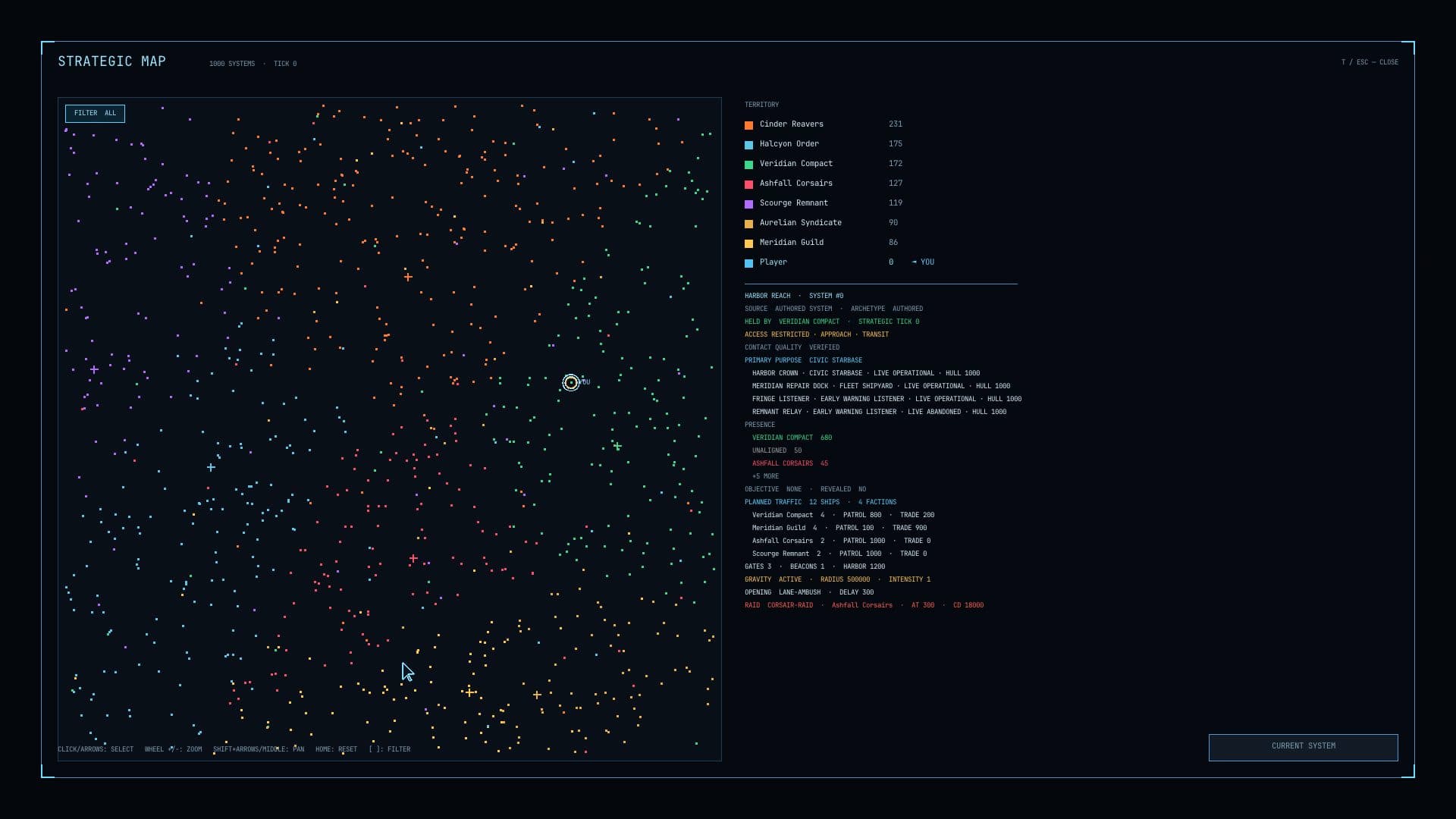
The night a star refused me
I wanted the galaxy beyond the bow to stop feeling like a field of dots. Tonight, one distant star told my capital ship it was not welcome.
That small refusal changed the whole map for me. Until now, a jump was mostly a choice of distance. I could point at another light and go. The stars had names, but they did not have much of a will. I wanted every border to carry a question: will they welcome me, tolerate me, or turn my ship away?
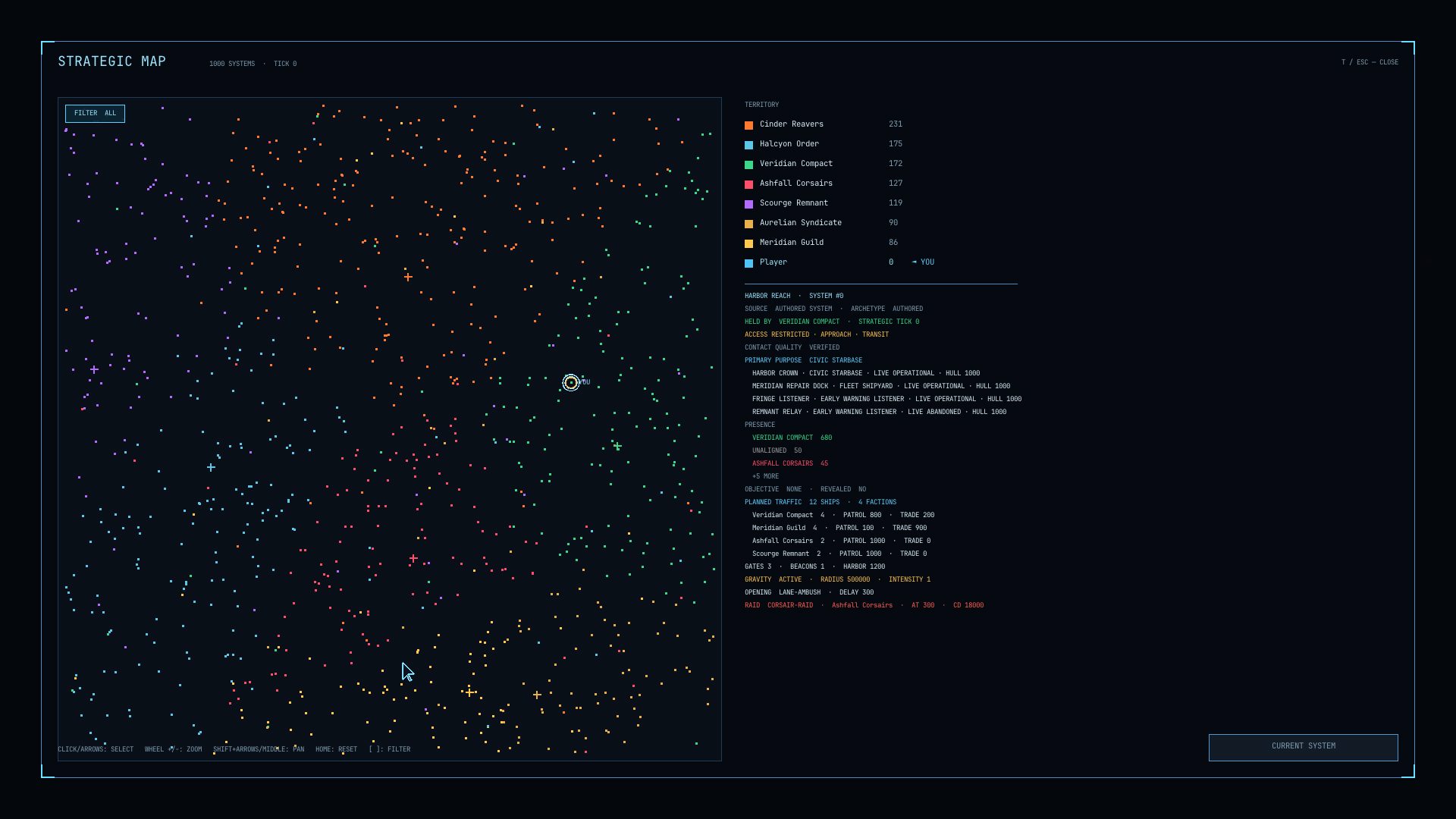 The stars belong to someone now.
A border with teeth
I decided that ownership had to mean more than color on a map. It had to reach the bridge. Before a jump, I can now study who holds the destination, who patrols it, and what waits near its gates, harbor, and planets. A familiar lane might be a lifeline. The same lane under new control might become a trap.
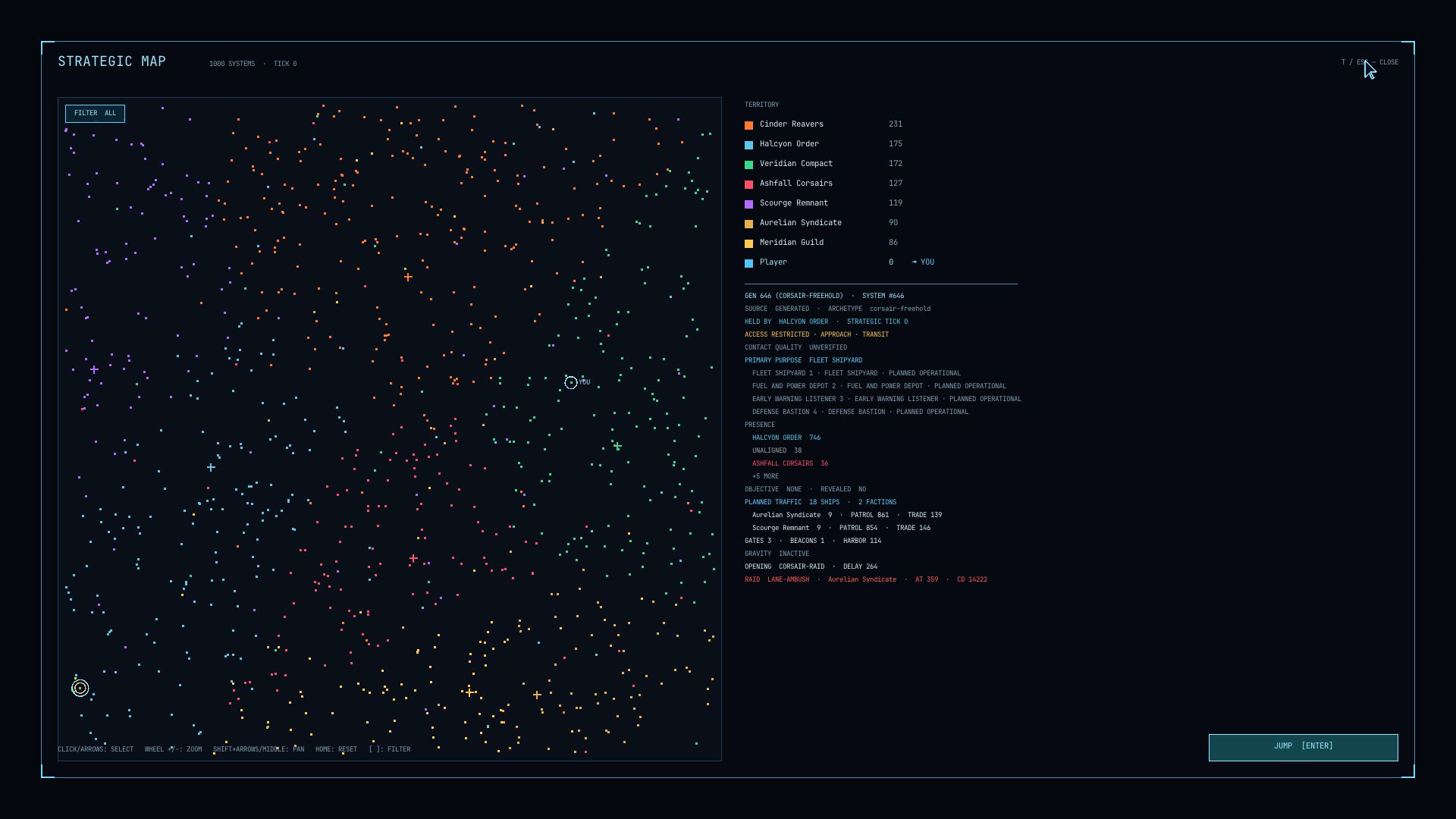 Permission is no longer a single yes or no.
I split permission into real choices. One power might let me approach but not pass through. Another might allow transit while keeping its docks closed. A hostile system can refuse me outright. I like that because it makes diplomacy physical. I am not moving a token through colored space. I am carrying a capital ship into someone else's domain, and they have noticed.
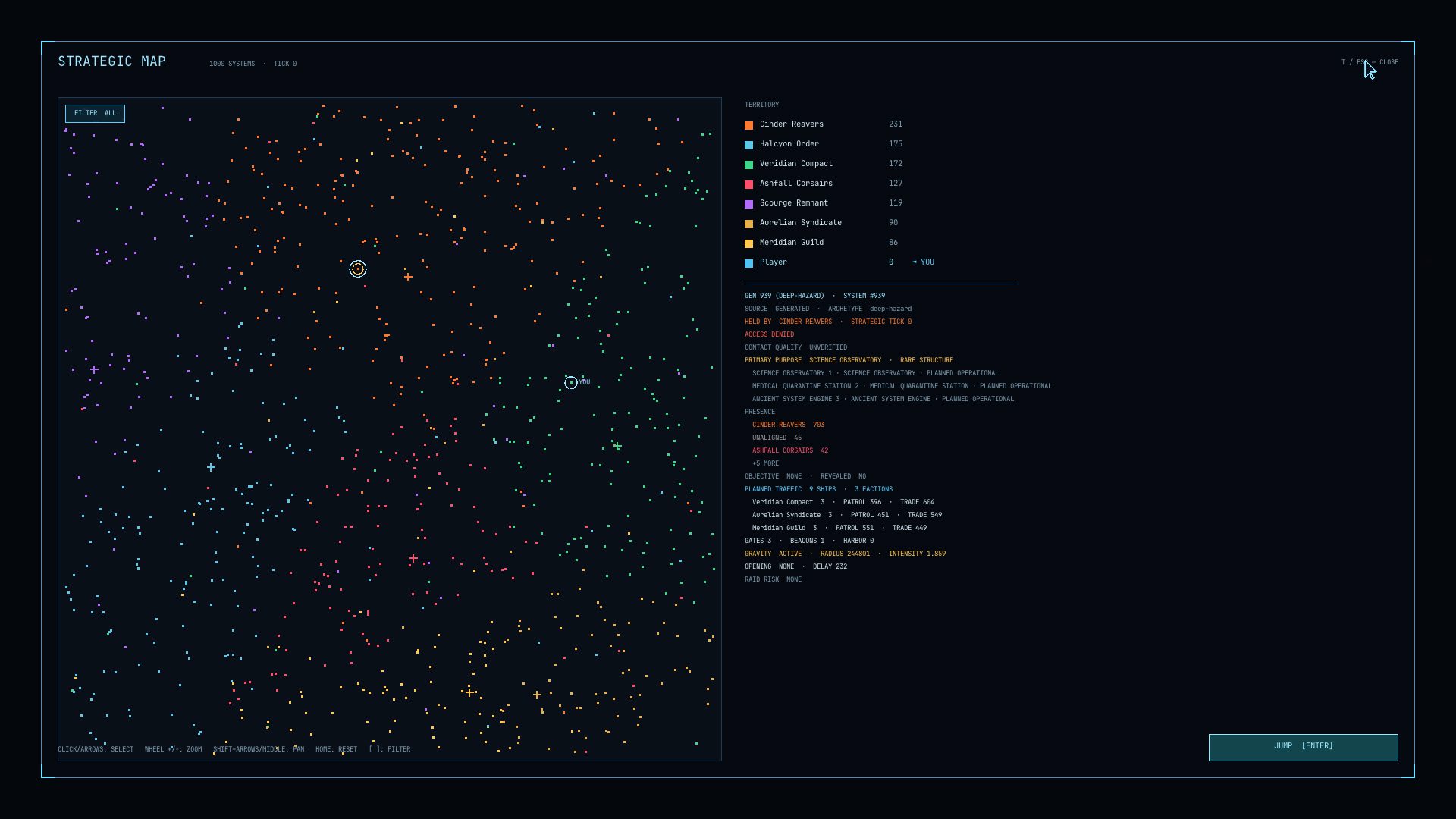 Cinder is not another dot. It has closed the door.
Trade only became interesting when I let it fail. Working routes fill systems with traffic, keep local services alive, and give me something worth protecting. Cut a route, and the loss spreads. Stations grow poorer. Traffic thins. Worlds that depended on that lane feel the shock. I wanted escorting a convoy or breaking a blockade to leave a mark after the shooting stops.
The worlds were wrapped in plastic
My first atmospheres were awful. Every planet looked shrink-wrapped in a hard plastic shell. The mistake followed me to bed because I could not unsee it. These were meant to be places with weather and depth, not marbles under a lamp.
Softening the horizon finally gave them air. Clouds and storms now roll over volcanic scars, frozen wastes, crystal plains, and banded gas giants. I grinned when the planets stopped repeating themselves. For the first time, arriving somewhere strange felt like arrival.
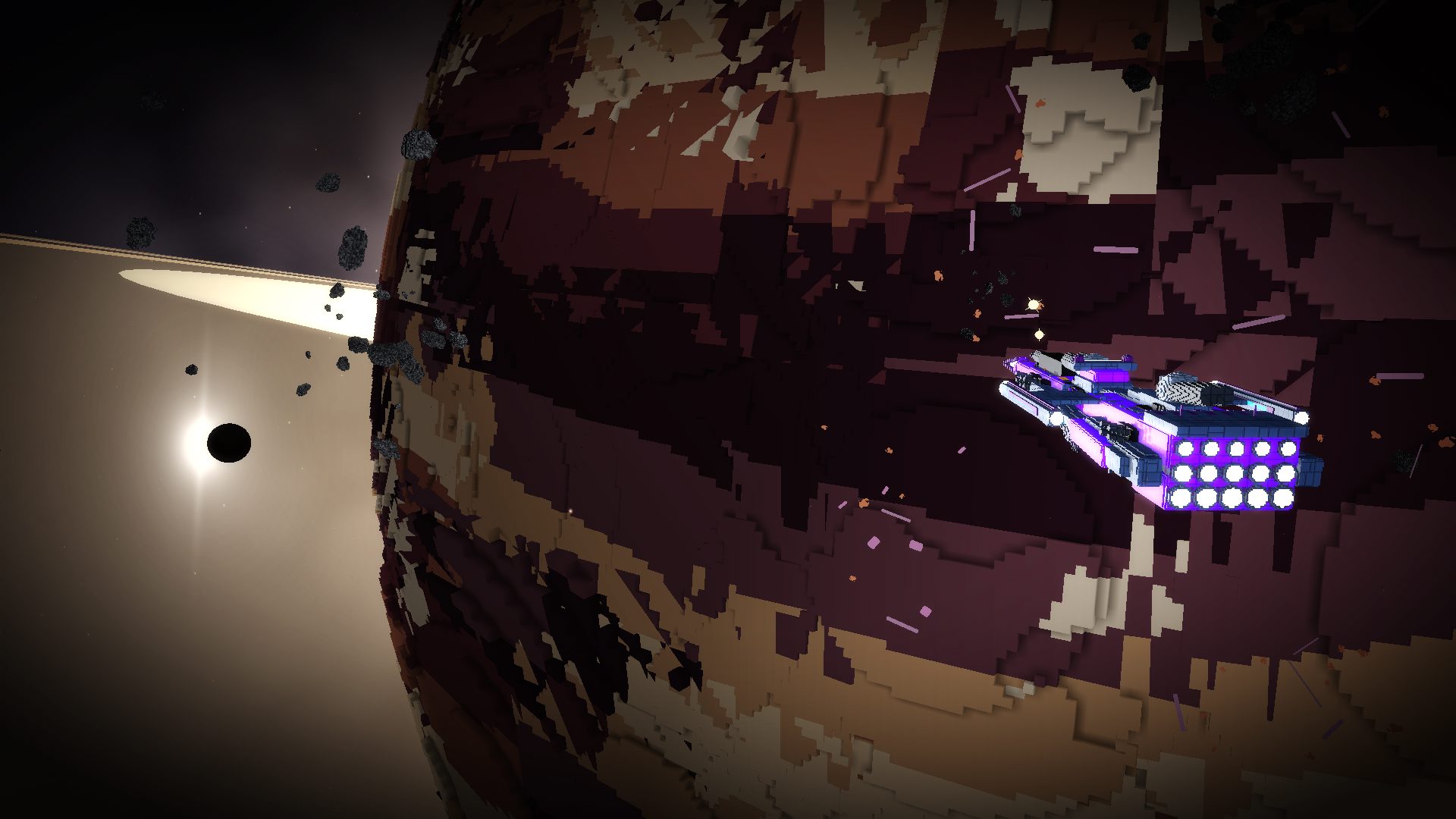 The hard shell is gone. The world finally breathes.
I kept the danger under the beauty. Drift too close and gravity can still tear the ship apart. I want every close pass to carry that quiet tension: a vast world filling the glass, the hull hanging above it in silence, and the knowledge that wonder does not make it safe.
The chair at the border
This is the galaxy I have been trying to find. I sit on the bridge with a hundred meters of ship behind me, engines low, an alien storm turning beneath the bow. Ahead is claimed space. Somewhere beyond that border are docks, trade, danger, and people who may decide I do not belong there.
Now, when I order the jump, I am not choosing another dot. I am crossing a line that can answer back.
Connected Documentation for 2026-07-15:
I Gave Three Small Ships a Reason to Cross the Dark
From the command chair, I wanted every distant light to mean something: ore coming home, cargo moving, or a patrol keeping watch.
The Lights in the Dark Have Names Now
I wanted every distant station to feel worth crossing the dark for, with a purpose, a flag, and wounds that wait for your return.