I Gave Three Small Ships a Reason to Cross the Dark
From the command chair, I wanted every distant light to mean something: ore coming home, cargo moving, or a patrol keeping watch.
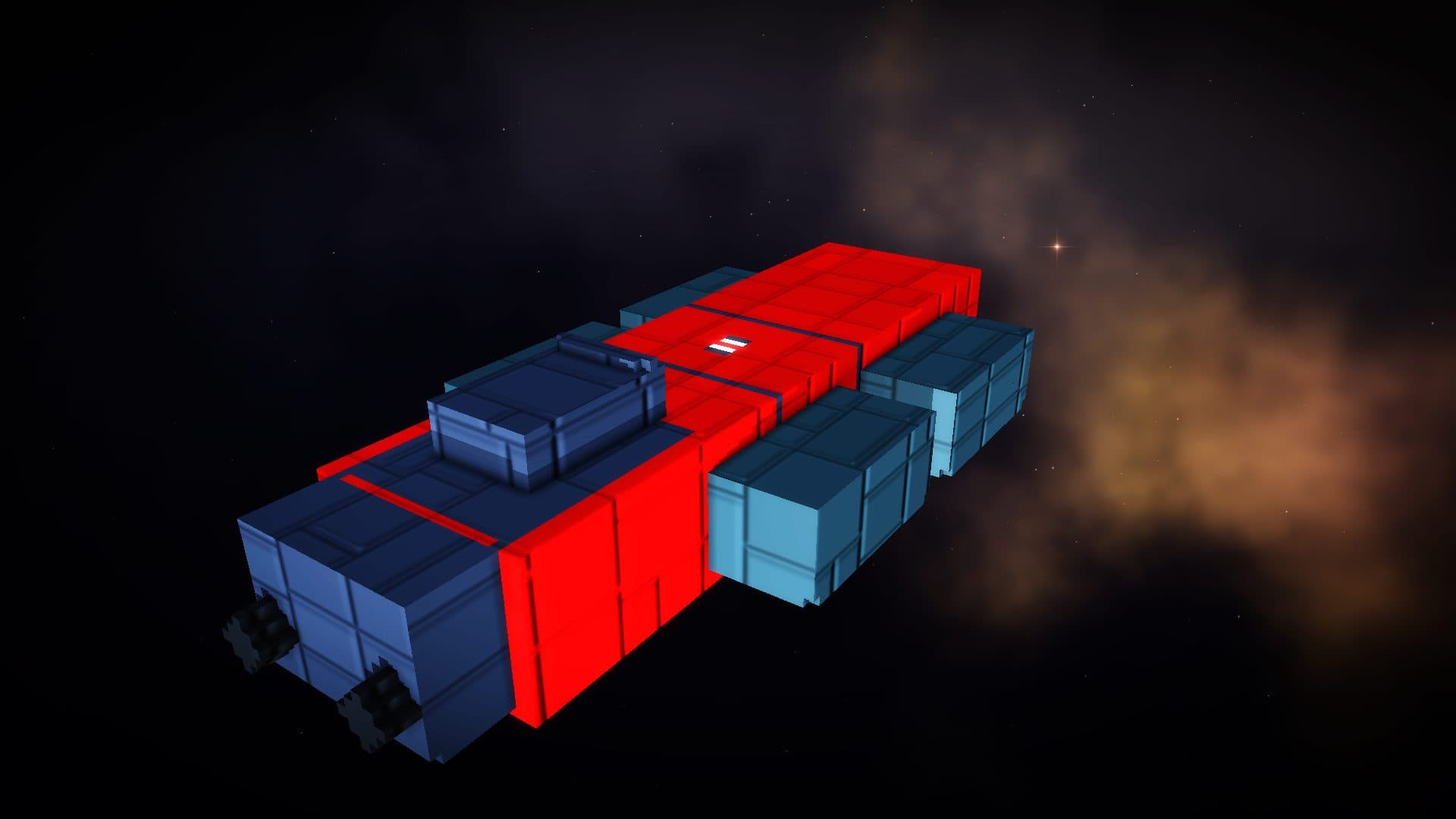
The lights were lying
My first small ships could cross a star system, but they had no reason to. They were moving decoration. A cargo hull might drift into patrol duty. A security craft might wander past a mine as if it had somewhere useful to be. From a distance it looked busy. The moment I paid attention, it felt fake.
That bothered me more than an empty sky would have. An empty sky is honest. Meaningless traffic is a promise that collapses when you look at it.
So I made one simple choice: every hull gets one honest job, and it keeps that job wherever it goes.
Three shapes, three lives
The Prospector works the rough edges of settled space. It mines, surveys, and picks through salvage. I gave it a long working silhouette because it should look ready to bite into a rock before it ever starts moving.
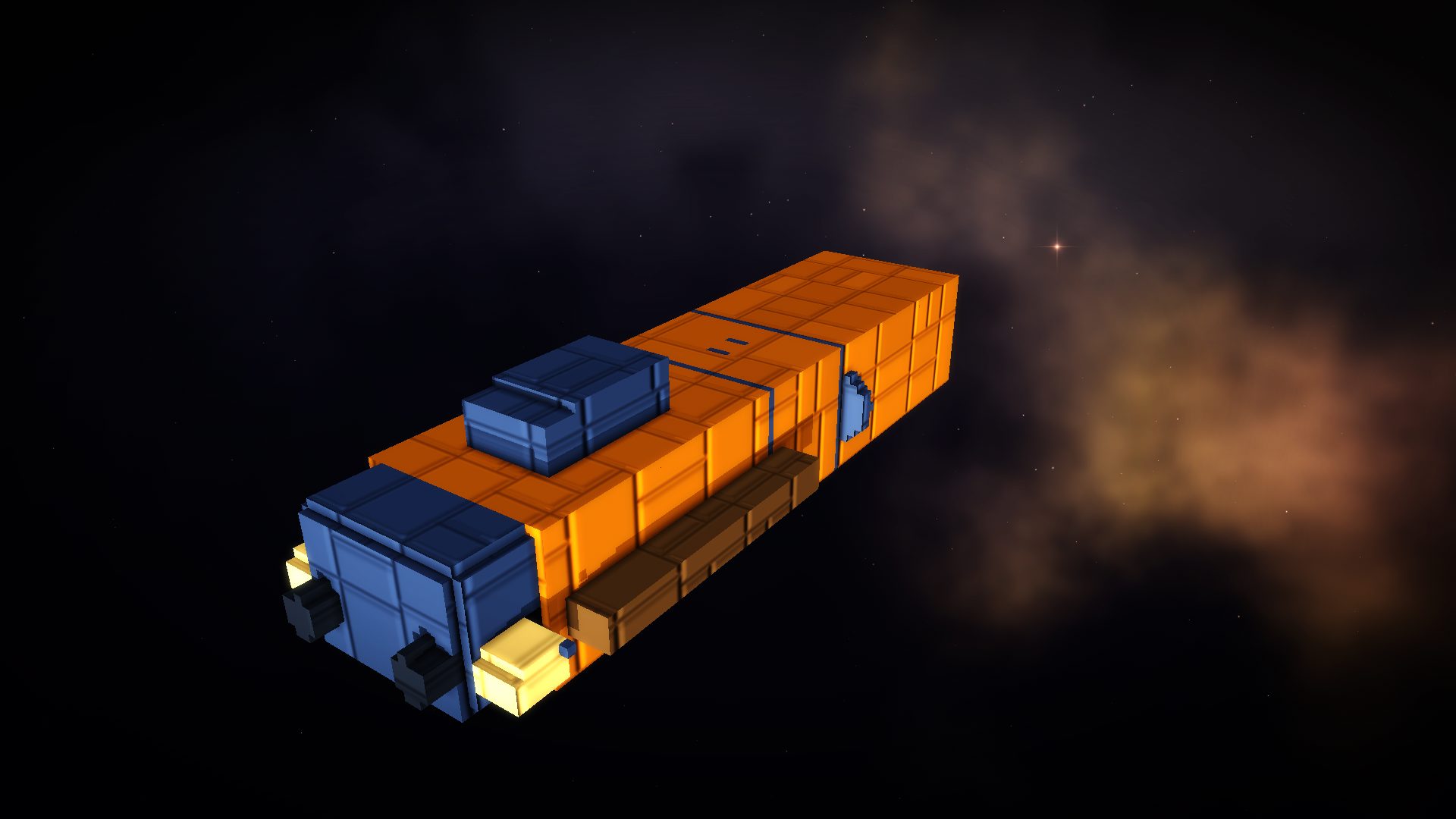 The Prospector looks like a working ship before it begins the shift.
The Mule hauls what keeps a system alive: cargo, supplies, relief, and repair crews. It is a blunt little freight brick, compact and built around capacity. There is no swagger in it. I like that. Most of civilization is held together by ships that simply show up with what was promised.
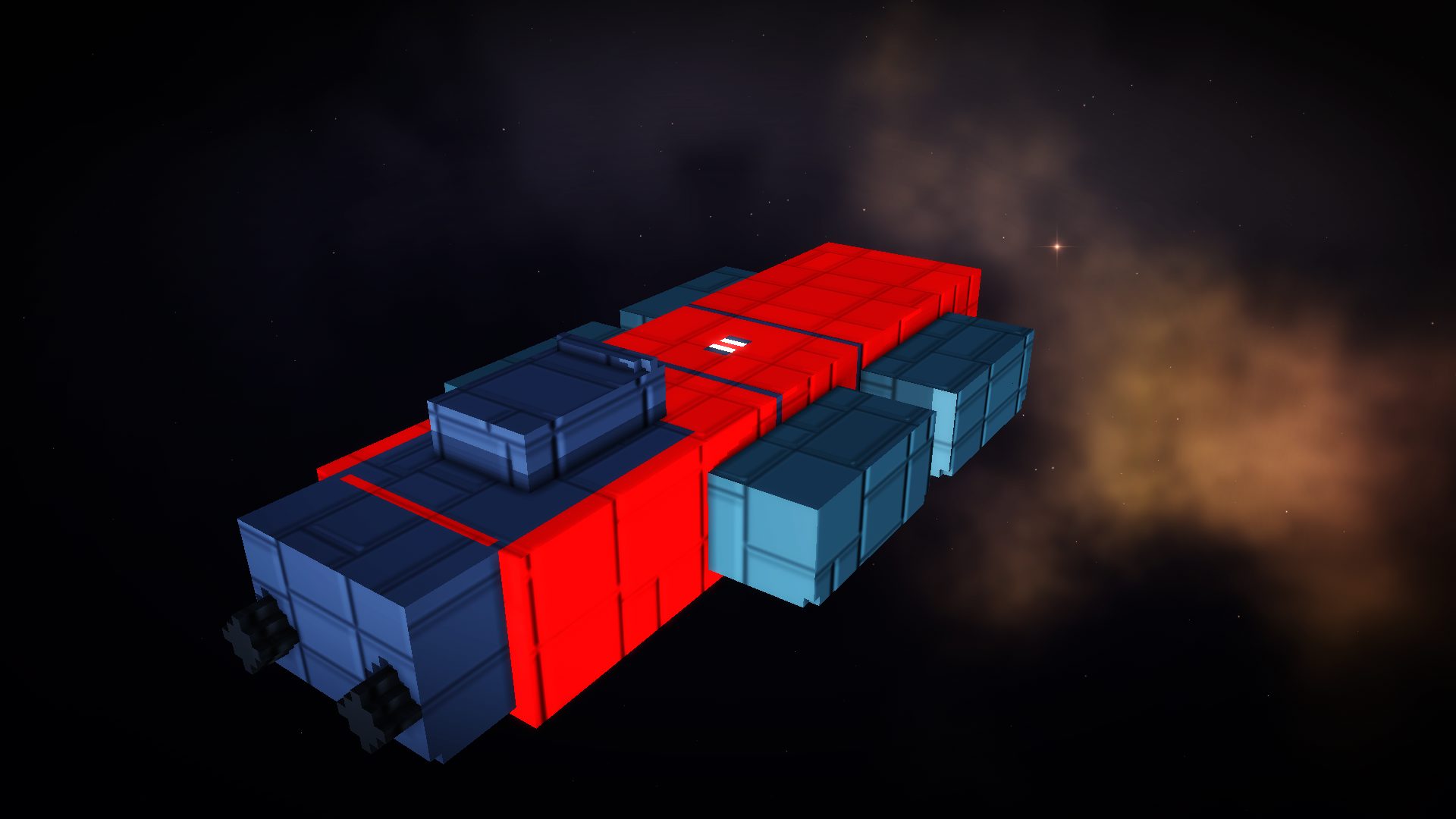 The Mule carries the unglamorous things a living place cannot do without.
The Sentinel is the wide-shouldered one. It patrols stations, escorts traffic, screens larger fleets, and holds the line at blockades. I wanted its silhouette to say, quietly and immediately, that somebody is watching.
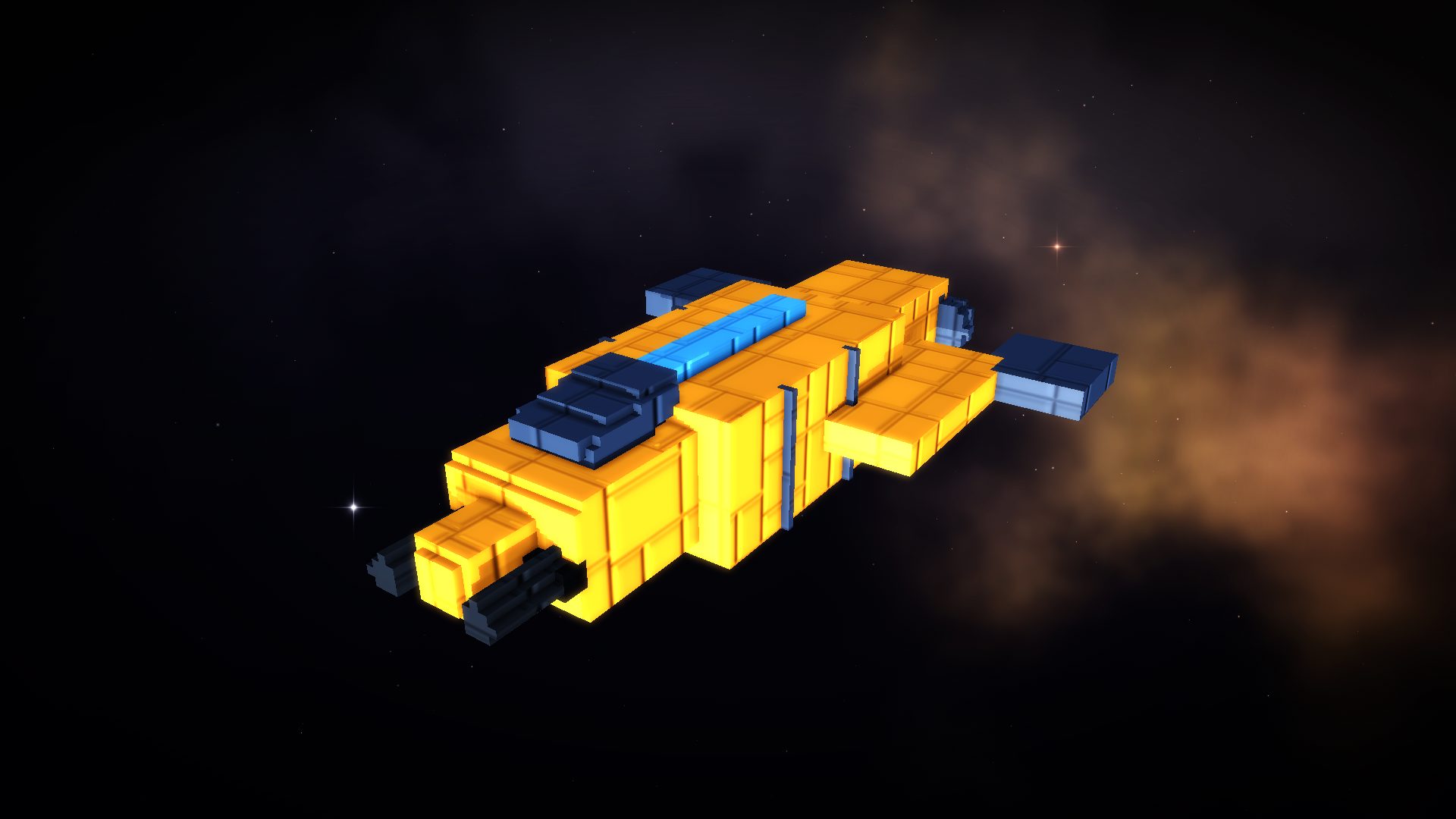 The Sentinel has the stance of a ship already standing guard.
Every faction now fields its own mix of these jobs. A mining power sends out more Prospectors. A trade network leans on Mules. A nervous border fills with Sentinels. More importantly, the role stays with the ship. A Prospector does not arrive somewhere new and forget that it is a miner. A Mule does not wake up wearing a guard's badge.
The view from the bridge
The real payoff arrived when I watched a Mule pass close under a planet, its exhaust steady as it carried on with a job that had nothing to do with me.
I stayed up watching those little ships work long after I knew the idea had landed. That surprised me. I thought I was giving the background more sense. Instead, I changed the feeling of the command chair.
From the bridge of a capital ship, the workers are tiny moving lights against the hull. They dart between stations and rocks while your warship hangs in the dark, slow and immense. Their speed makes its mass legible. Their ordinary errands make its purpose feel dangerous. I grinned the first time a hauler slipped past the bow and made the whole ship feel heavier without the capital ship moving at all.
That is the world I want to arrive in: not a stage waiting for the great warship to enter, but a place already busy with ore, medicine, spare parts, and watchful patrols. Lives are in motion before I take the chair. They keep moving after I pass. Somewhere beyond the glass, every small light has a reason to cross the dark.
Connected Documentation for 2026-07-15:
The Galaxy Learned to Say No
I wanted the galaxy beyond the bow to stop feeling like a field of dots, and tonight one distant star told my capital ship it was not welcome.
The Lights in the Dark Have Names Now
I wanted every distant station to feel worth crossing the dark for, with a purpose, a flag, and wounds that wait for your return.