The Day I Lit the Whole Sky
For weeks my ship sailed through a darkness it carried with it, until one switch finally lit the whole sky and the hull became something worth flying.
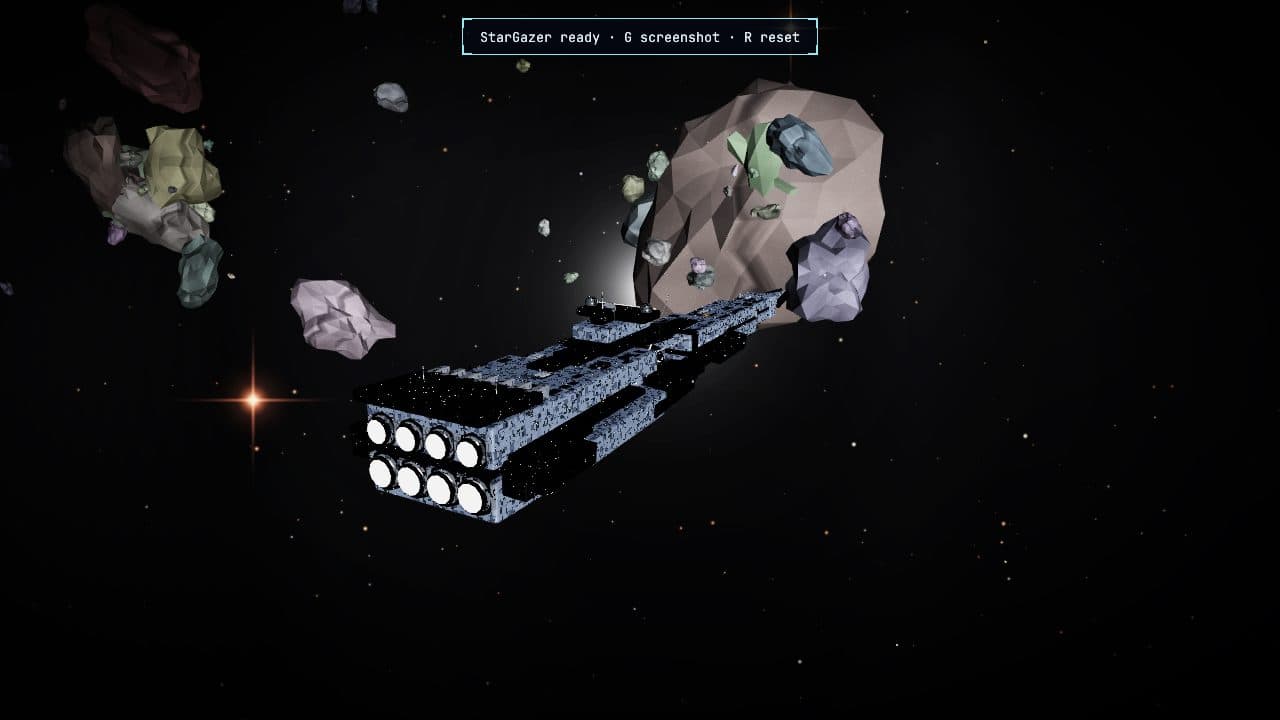
Dev log
For three straight passes I typed the same defeated note: too dark. I kept turning the lights up and the bridge stayed a coffin. Then I asked the obvious question out loud, found the embarrassing answer, and flipped one switch. The whole sky came up at once. I grinned at the screen like an idiot.
Why the ship kept disappearing
Here is the thing about commanding a hundred-meter ship in the dark: you are supposed to be able to see it. Mine was a silhouette. I would sit in the chair, the camera parked behind the stern, staring at a black cutout drifting across the stars like my own reflection in a night window. That is a special kind of maddening, because the failure does not have the decency to look like a failure. It looks like space.
So I turned the lights up. Still too dark. Up again. Still too dark. Three times I lifted them and three times the hull stayed a hole in the void, and I started to wonder if I was losing my mind. If the player cannot see the ship, there is no ship. There is just a cursor with mass.
The reason, once it surfaced, was almost funny. Every object in the scene was hoarding its own private little sun. The ship had one idea of where the light came from, the asteroids had another, the far planet a third. They had drifted apart quietly over months of work, none of them agreeing, and I had been brightening one and wondering why the rest stayed in shadow. I never noticed until I said it plainly: aren't lights supposed to light everything?
One sun for everything
So I tore out all those private suns and gave the whole universe a single one. One source. One direction. One switch. I flipped it and, for the first time, the entire scene came up together: ship and rock and the distant world all catching the same light from the same place at the same instant. The hull stopped being a shape and became a thing, with plating you could read and running lights and a lit flank and a shadow side. I directed the AI to chase down every last object still clinging to its own opinion, and when the final holdout fell into line the battlefield felt like one place instead of two worlds stapled together.
The chase camera, it turned out, had been making everything worse. It stares straight at the ship's shadowed side, the half the sun never touches. So I poured light onto the flank facing me and let a thin glance of brightness rim the silhouette, and the cutout became a vessel: edges catching the light, detail you could trace, a real machine you are riding rather than a gap in the stars.
The asteroids came alive in the same breath. They had been dark lumps you only knew by the bright line where the star clipped them. Now they read as faceted rock, mineral fire glinting green and blue across their flanks, brightening in lockstep with the fleet. And the fleet itself got proud. The old paint was so dark that most of my ships read as the same muted grey smudge. I repainted every house into its own color: steel-blue for the ship I fly, sky-blue for the civilians, teal and gunmetal and a rusty raptor brown, an abyssal violet, a yew green, a magenta so loud it looks toxic. A battle line now reads as a clash of distinct houses instead of a fog of grey.
The sting
Then the moment I got it bright, my engines stopped working. Or that is what it looked like. I lit the world and the thrusters vanished. The big stern burn dimmed to a grey smudge and the little maneuvering jets disappeared completely. For a minute I was sure I had broken thrust itself.
I had not. The plumes were firing fine. They just could not compete with the new daylight. They had been tuned against a near-black sky, where a faint glow reads as fire, and lifting the whole world washed that same glow out to nothing. The exact same lesson wearing a different coat: I had brightened the scene and left the engines behind on their old, private, dimmer setting.
The fix was the same answer too. One knob, for every glowing thing at once. Now when I raise the scene, the engine fire and the weapon flashes and the tracers and the bright pop of an interceptor all rise with it, together, instead of one of them always slipping through and drowning. Under thrust the plume blazes and stretches and pulses, alive against the brighter dark.
Visual changelog
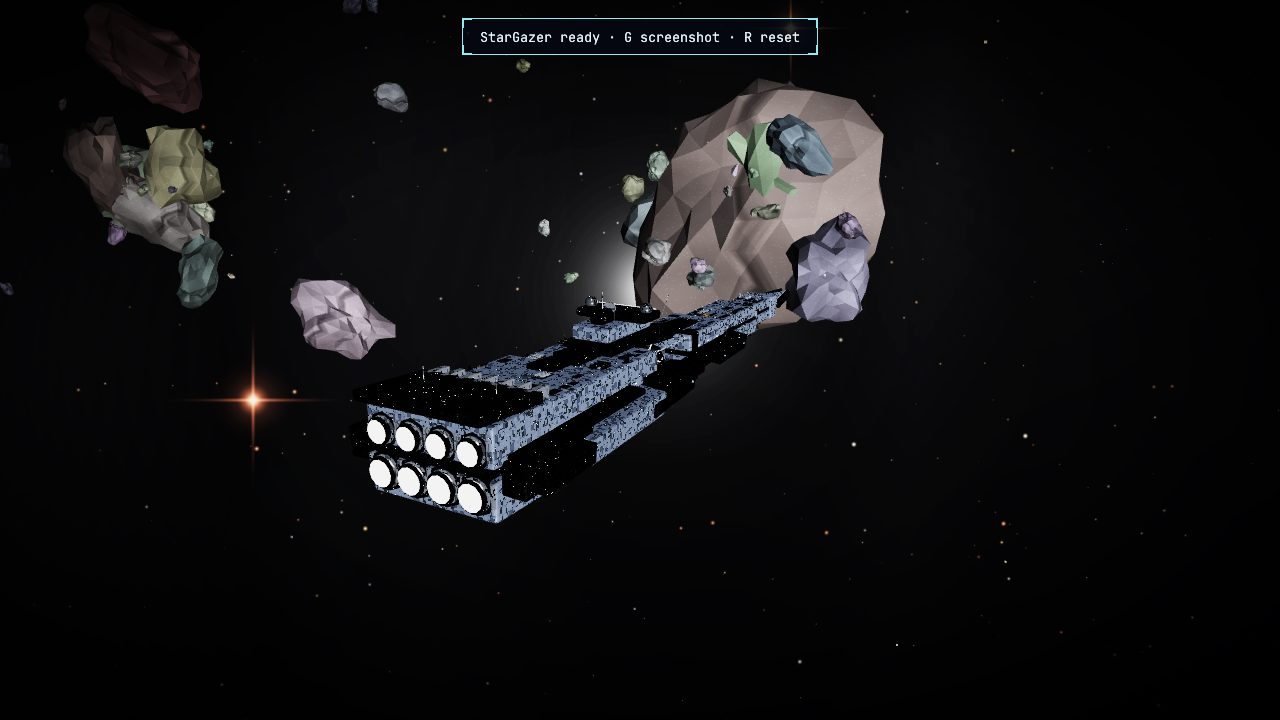 This is the ship I wanted to fly. The hull is plating and light now, not a hole in the dark, and the sun behind the rock proves it is all one place.
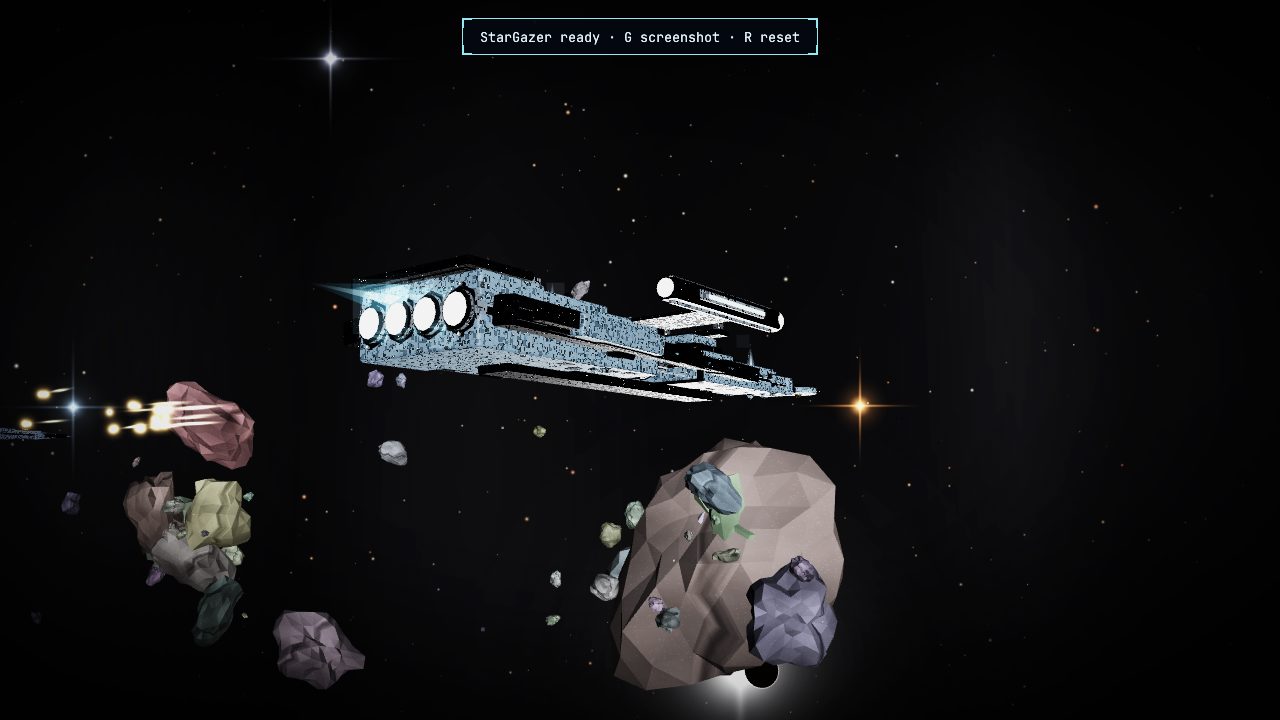 A second hull, the same star. Ship, asteroid, and the streaking fire are all lit from one place, which is the whole point.
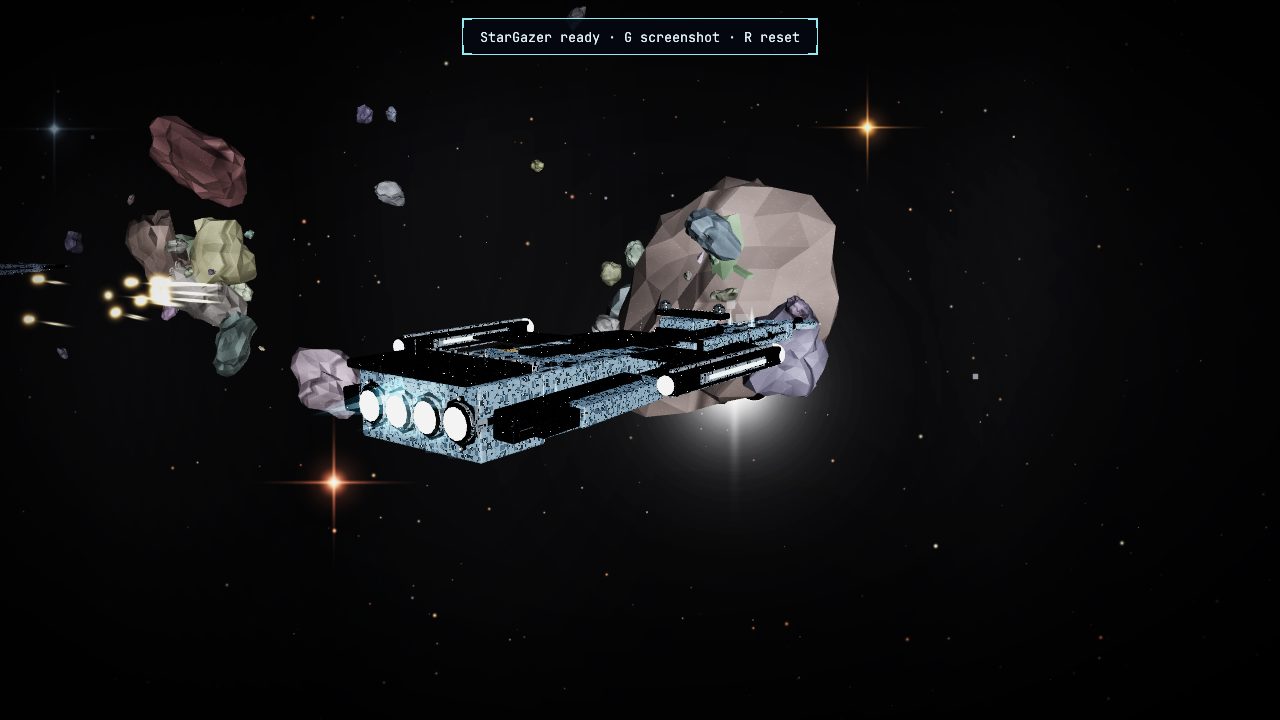 A third vessel turns its broadside to the light. The tracers read bright because they finally rise with the scene instead of washing into it.
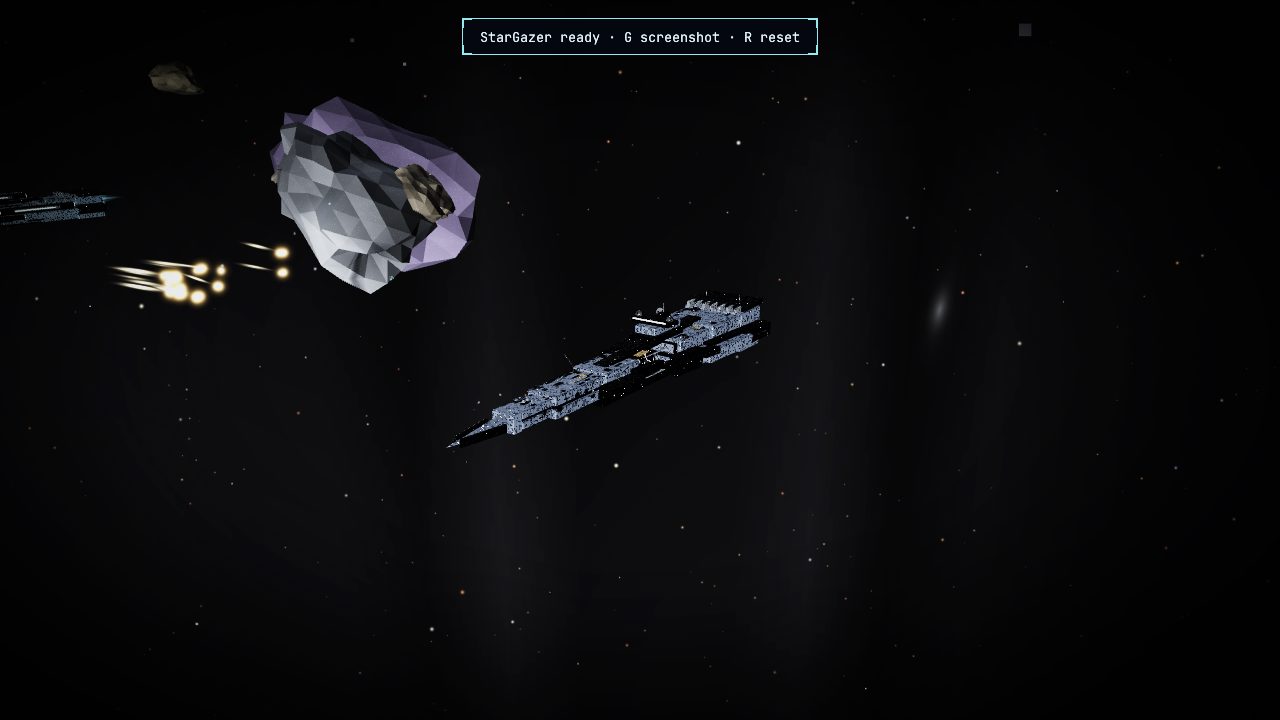 Pull back and the whole world holds together: hull, rock, a far planet, and the sun pouring across every one of them from the same direction.
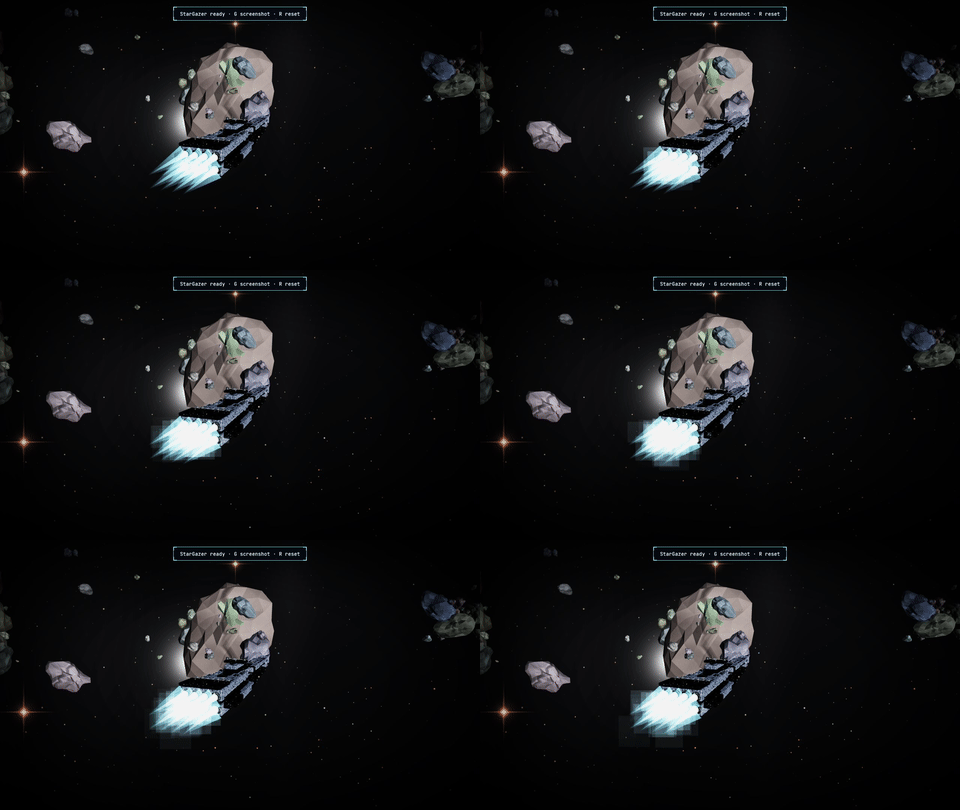 Under thrust the plume blazes and breathes, alive against the brighter dark instead of vanishing into it. This is the clip I kept replaying.
Retrospective
I spent three nights certain the lights were broken when the real problem was that there were too many of them, each one a stubborn little secret kept by a different object. The fix was not more light. It was one light, honestly shared. Now I can sit in the chair, park the camera behind the stern, and actually see the thing I command: a hundred meters of lit hull leaning against the dark, a sun raking its bow, a field of glittering rock answering to the same dawn. Pick a star. Light it. Go.