A Million Blocks Deep
For months my capital ships were gorgeous hollow shells that faked every wound. This week I deleted the last of them and rebuilt the whole fleet out of solid matter, so now when you punch a hole in one, you are staring straight into its guts.
Dev log
- I tore every smooth, hollow ship out of the game and rebuilt the whole fleet from solid blocks, close to a million of them deep per hull.
- For the first time, a hole in a ship is a real hole: punch through the armor and you see the decks, the ribs, the dark behind them.
- The first solid ships looked worse than what I deleted, and I nearly lost my nerve at one in the morning.
- Wreckage shears off and tumbles away into the dark on its own now, and so do the asteroids.
- I left two of my three machines unable to draw any of this for a week, on purpose, and it scared me.
Here is the one thing I want you to keep from this. A capital ship in my game used to be a beautiful lie. From the outside it was all sweep and menace, a hundred meters of warship wheeling against the stars. But it was hollow. A painted shell with nothing behind it. When you shot it, the shell would dent and crack in ways that had almost nothing to do with what was actually breaking inside. This week I killed the shell. Every ship is now solid the whole way through, built from millions of tiny blocks of real matter, and that single change turned my ships from scenery into things you can take apart.
The beautiful lie
For months a ship was two things pretending to be one. There was the gorgeous outer skin you saw, smooth and curved and lit like a model on a shelf. And there was a second, hidden ship underneath that the game actually used to decide what sat where, what got hit, what broke. The two were never quite the same shape, and keeping them in step was a quiet, endless tax.
The worst of it showed the moment anything got hurt. Because the skin was only a shell, I could not really open it. I could only shove it around to fake a wound: bend it inward, snap a chunk off, smear some char across it. The game knew a deck had been blown out, but the picture could only shrug and dimple the surface. Sometimes you would see clean through a ship that was supposed to be solid. Sometimes a mortal hit looked like one tile had popped loose, like a brick falling out of a toy. The damage was a rumor the outside of the ship was passing along, and it was usually wrong.
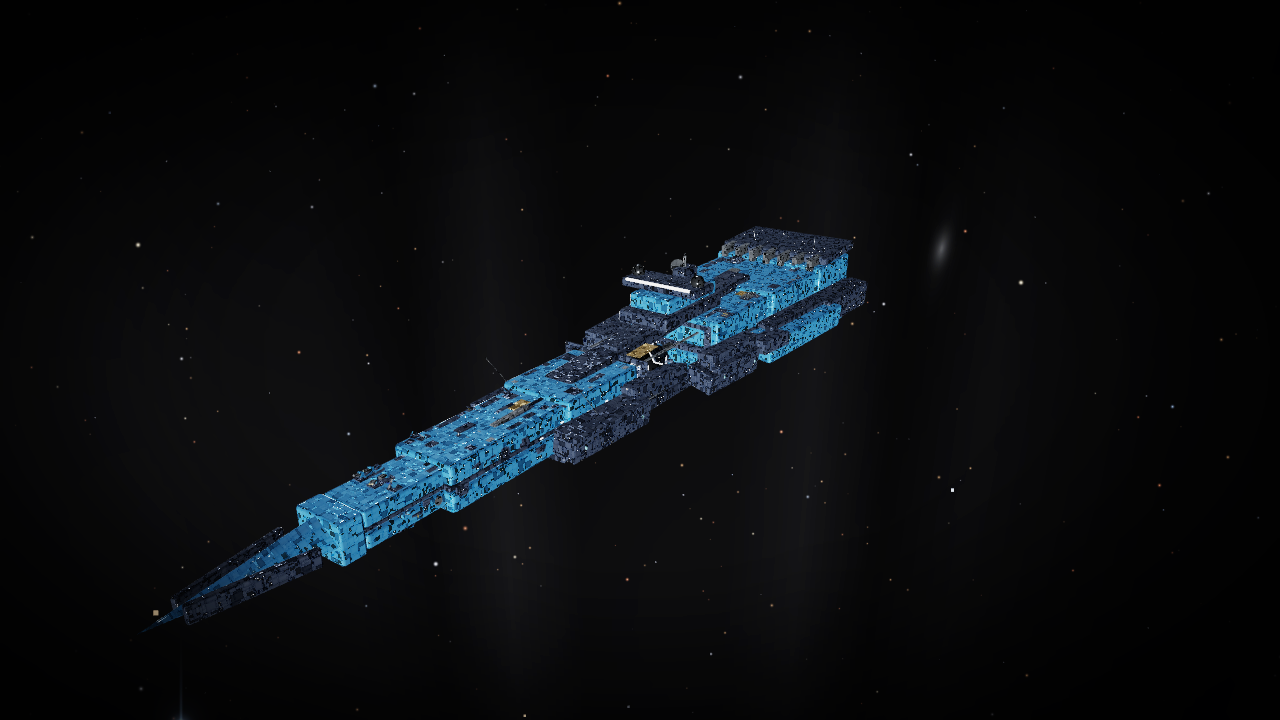 The old way. Beautiful from across the field, and completely hollow. A shell with nothing behind it.
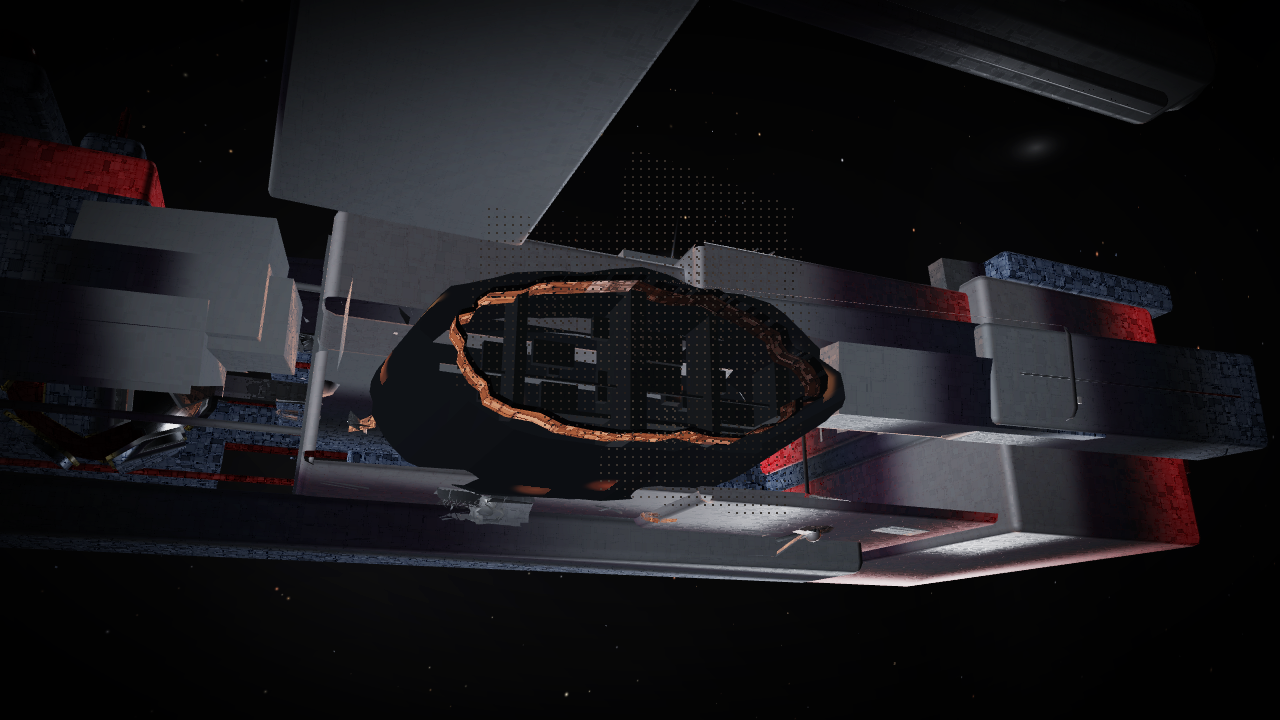 And this was a "wound." A dent with a glow painted around the lip. The ship had no insides for me to show you, so I faked a shadow and hoped you would not look too hard.
The week it got ugly
So I made the call I had been circling for weeks. Throw the smooth shells away entirely, and rebuild every ship out of solid blocks instead, as if each one had been carved from a single piece of stone. One ship, one solid thing. No hidden second version. No lie to keep in sync.
The first night, it looked terrible.
All the fine detail I had loved, the little ridges and panels and greebles that make a hull read as a real machine, simply vanished. What came back were big flat slabs of blue, blunt and toy-like, a warship with the surface of a bath toy. I had traded a beautiful lie for an honest brick. I sat there at one in the morning staring at this clumsy blocky thing where my ship used to be, genuinely wondering if I had just spent a week making the game worse.
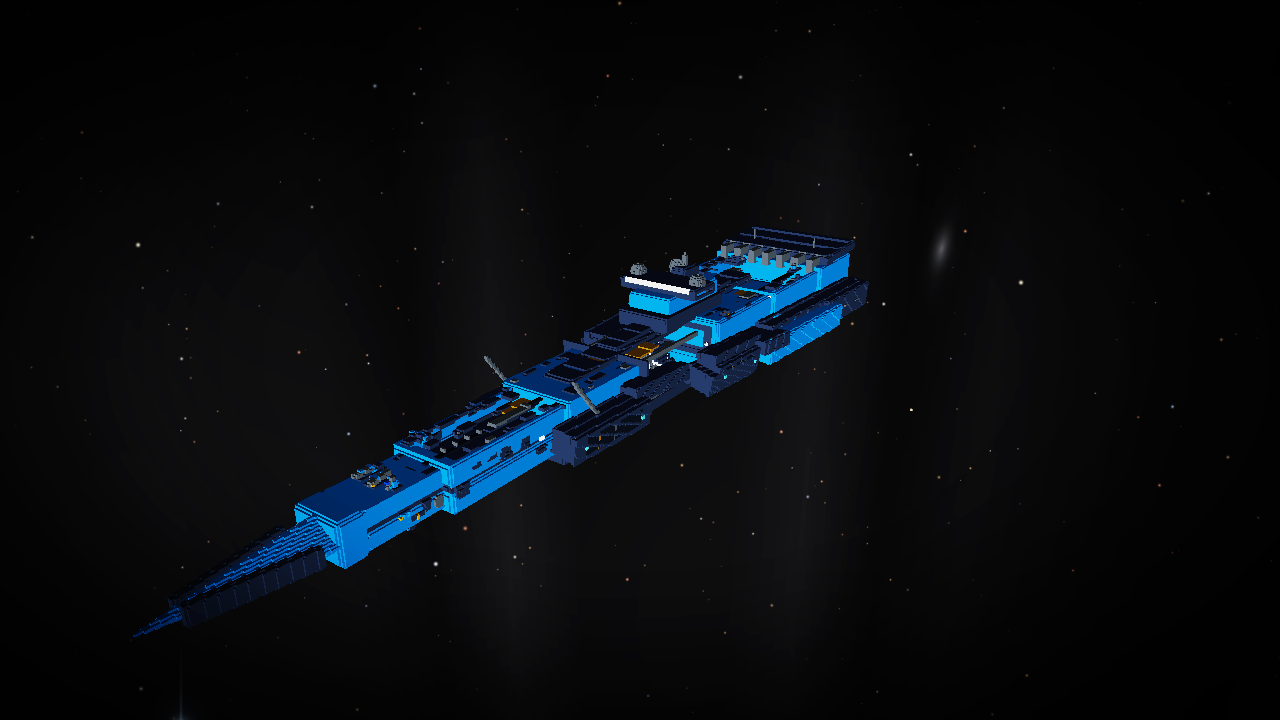 The first solid ship. Honest, and ugly. Every bit of detail I loved was gone, and I nearly reverted the whole thing on the spot.
Growing the skin back
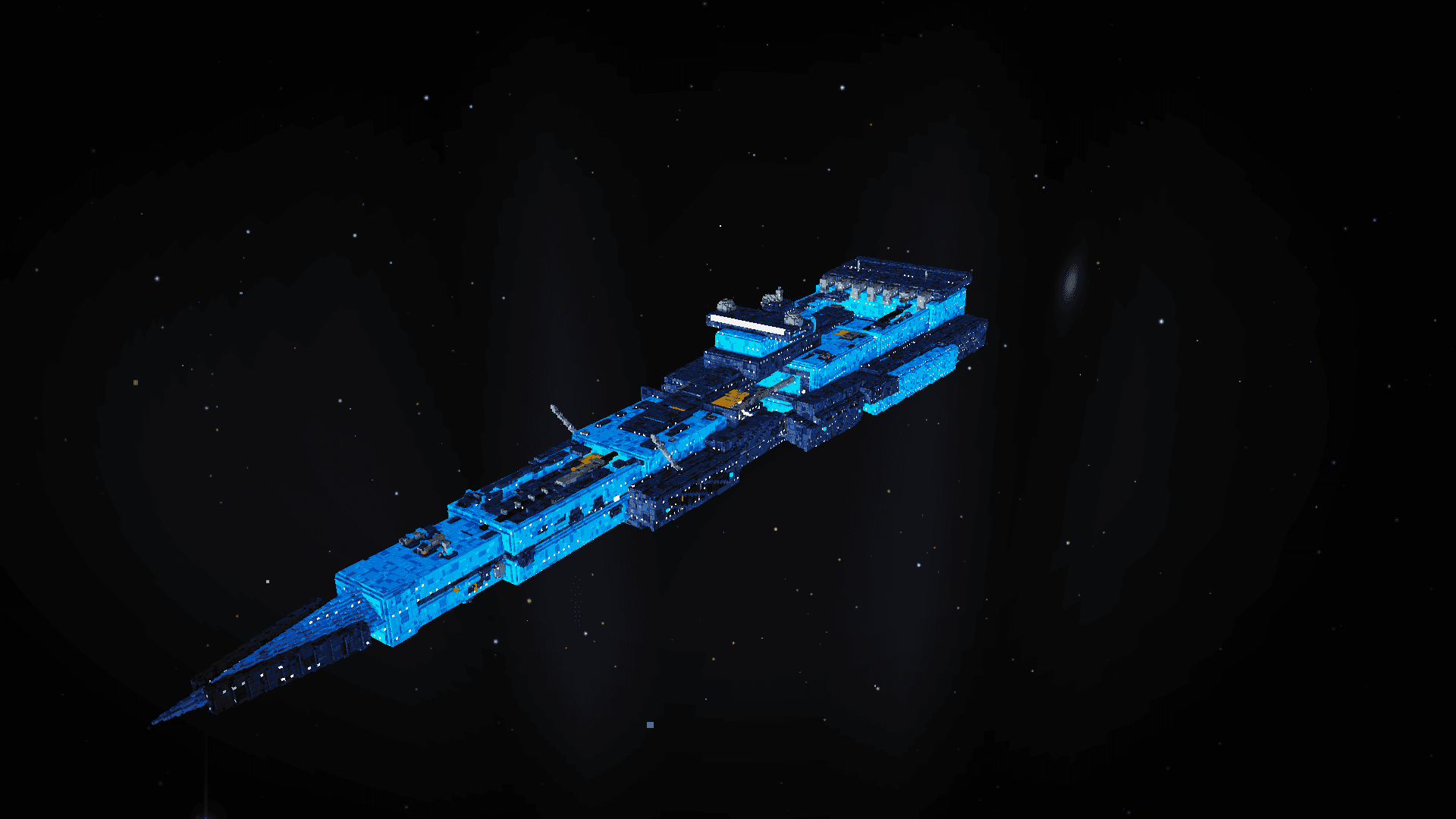
The fix was not to carve the detail back in by hand, one ship at a time, forever. It was to teach the ships to grow their own. The plating, the paneling, the long rows of warm lit windows down a flank, all of it appears on its own now, scattered across each hull by a rule instead of placed by me. Lean in close and a capital ship is a dense quilt of dark blue plates and little glowing portholes, each one a room with a light left on. Pull back and it is a hundred meters of menace again.
When that clicked, I stopped working and just flew around one of them for a while. It was better than the shell had ever been. Not a model on a shelf anymore. A structure. Something with the lights still on inside it.
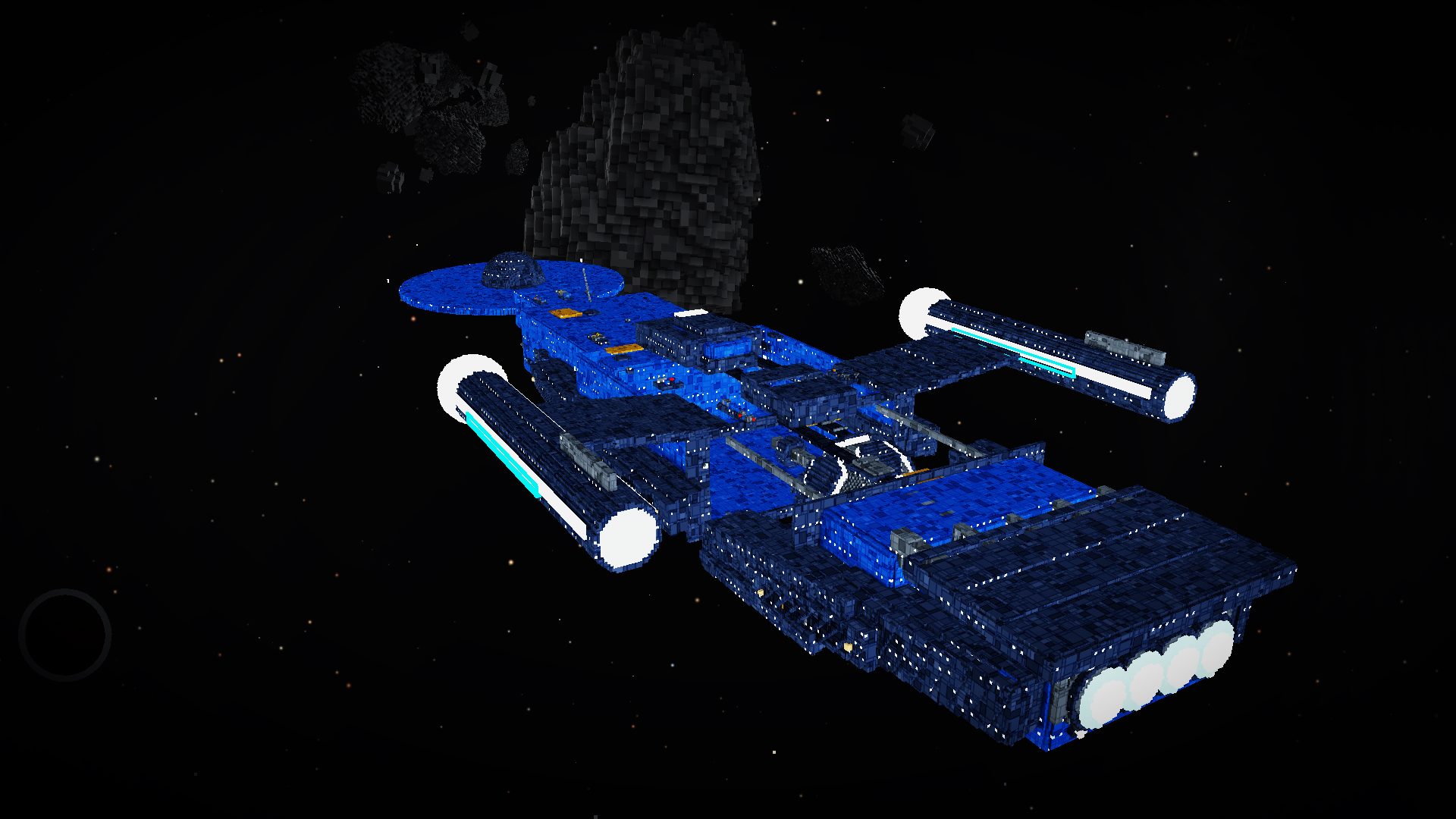 The ships grow their own skin now: dark plating, warm windows, a light on in every room. Better than the shell ever was.
A hole you can see through
Then came the part this whole game was secretly always about.
Hit one of these ships now and you do not dent a shell. You delete matter. The blocks where the shot landed are simply gone, and because the ship is solid the whole way down, what is left is a real cavity: torn plating at the lip, the decks and ribs laid open behind it, and past those, the black. You can line your camera up with a fresh breach and look straight through a warship and out the far side at the stars.
I hit a cruiser over and over that first night just to watch it come apart. Take enough fire and whole sections shear away and drift off, tumbling slowly, real wreckage with real mass spinning into the dark while the rest of the ship keeps fighting. The asteroids behave the same way. They are solid blocks too, so you can grind one down to gravel, and no two ever come apart the same.
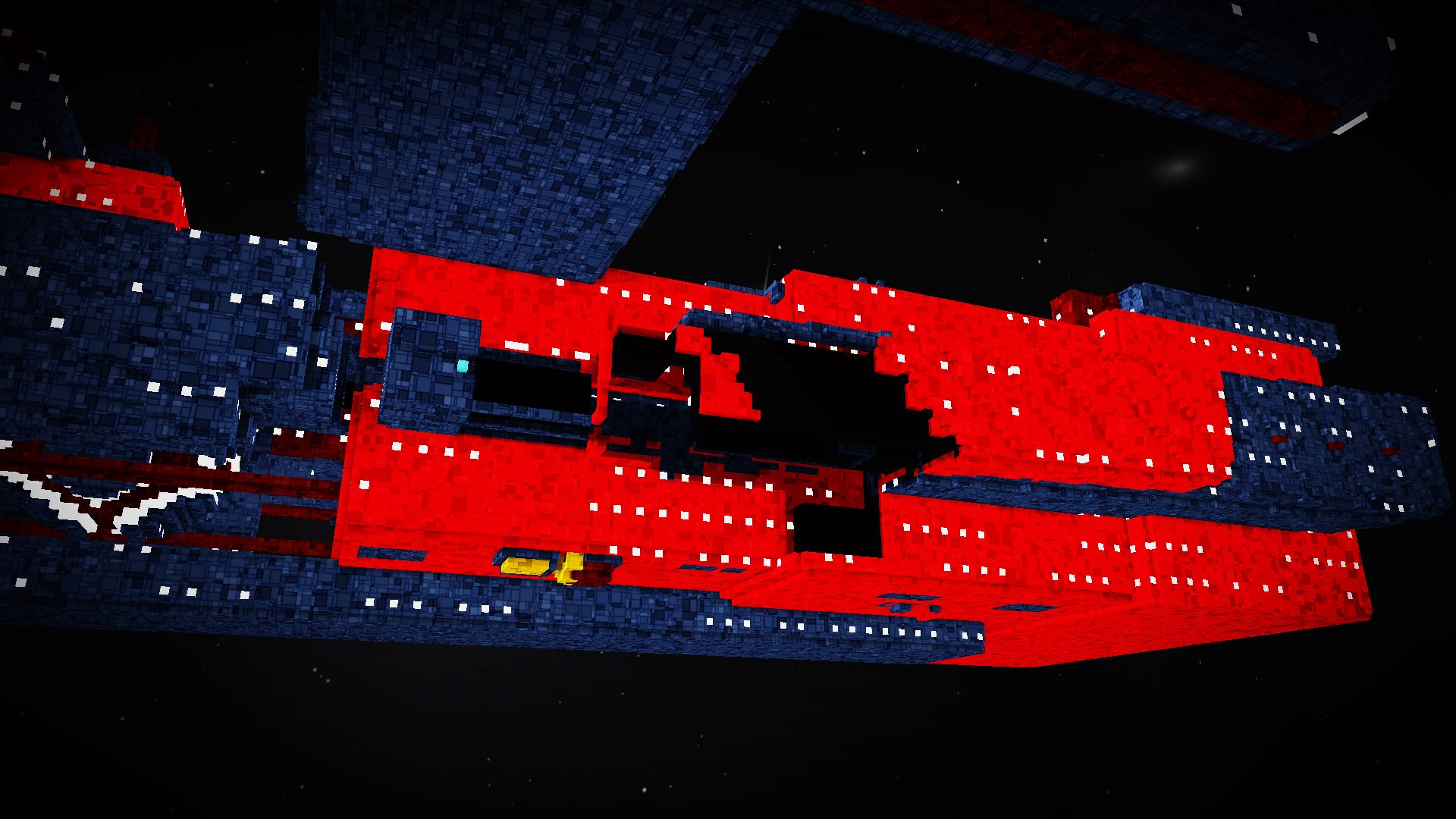 This is the whole reason I did it. That hole is not painted on. The blocks are gone. You are looking at the actual inside of the ship, and the stars on the far side of it.
What the change cost me
I will not pretend this came free. You wanted the honest version of the trade, so here it is.
I gave things up. Up close, my ships are made of cubes now, and if you press your face right against a hull you will see them, hard little edges where there used to be a smooth curve. Building a new ship got slower and fussier, more like sculpting than sketching. And I burned the bridge behind me on the way out: those old smooth ships could be opened in just about any other 3D program on earth, and these new ones cannot. They only live here, in this game. There is no road back.
The scariest cost was the last one. The new look only runs on my own machine right now. I knowingly left the other two kinds of computer I am building this for completely dark, unable to draw a single ship, and I did it on a bet that I can light them back up inside a couple of weeks. Walking away from a thing that already worked, on nothing but a promise to yourself, is its own special kind of nervous.
But set against all of that: the lie is gone. There is exactly one ship now, and it is honest. The thing the game knows is broken is the thing you see broken, every time, the same way every time. Holes are holes. Insides are real. Wreckage is real. And a fight between two of these things finally carries the weight I always pictured for it.
Why the ships hit harder now
All of that lands hardest on the thing this entire game is about: the ships, and how much they weigh on you.
A capital ship is supposed to feel like a place, not a counter on a board. Now it is one. There is real depth inside it, deck behind deck, so it reads as something massive and inhabited from any distance. You can look at an enemy across the field and read its whole story at a glance, no health bar needed. That one is pristine. That one has a flank full of fresh holes and an engine sheared off. That one is trailing its own guts as it limps away. You start to learn where to hit, and that one clean shot into the spine does something a dozen scattered hits never will.
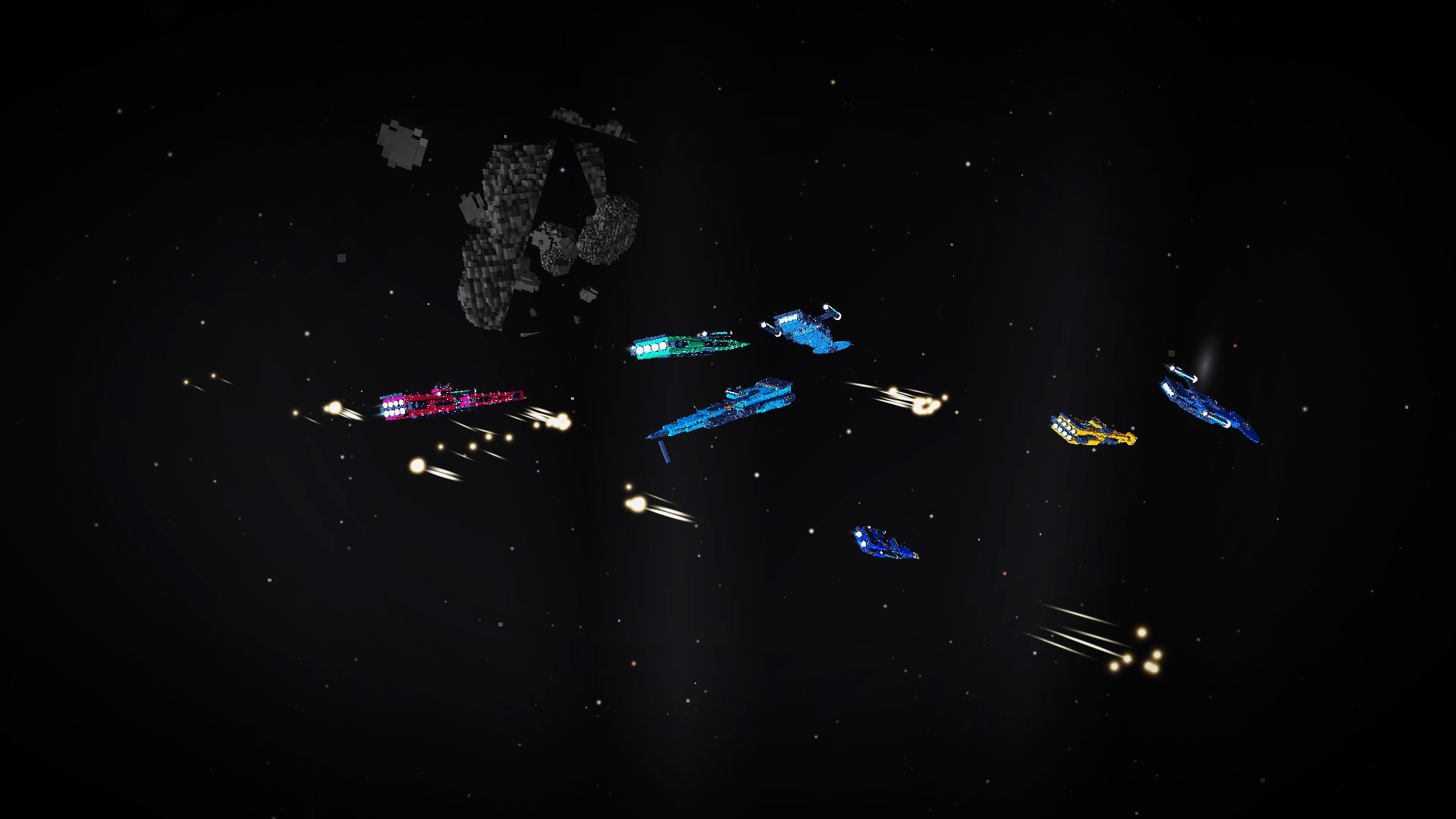 A whole fleet, every ship a different solid hull, every one of them now something you can pull apart block by block.
Retrospective
There is a moment I keep coming back to. You have been hunting one ship through the dark, losing it and finding it again by the glow of its windows. Your broadside finally connects, and instead of a shrug and a dent, the armor is just not there anymore. A hole opens into the body of the ship, light spills out of it, a slab of hull peels off and drifts away, and for the first time you are looking at the real inside of a thing you killed.
For months my ships could die and never show it. Now they are solid all the way to the core, and you get to watch the exact second one of them comes apart in your hands. Pick your target. Hold your fire until it counts. Then take it apart.