The Day I Could Finally Whisper To The Living Ship
Tuning the ship used to mean stopping the world, changing one number, and waiting to see it again. Now I reach into the ship while it is still flying, turn the dial, and watch it answer in the same breath.
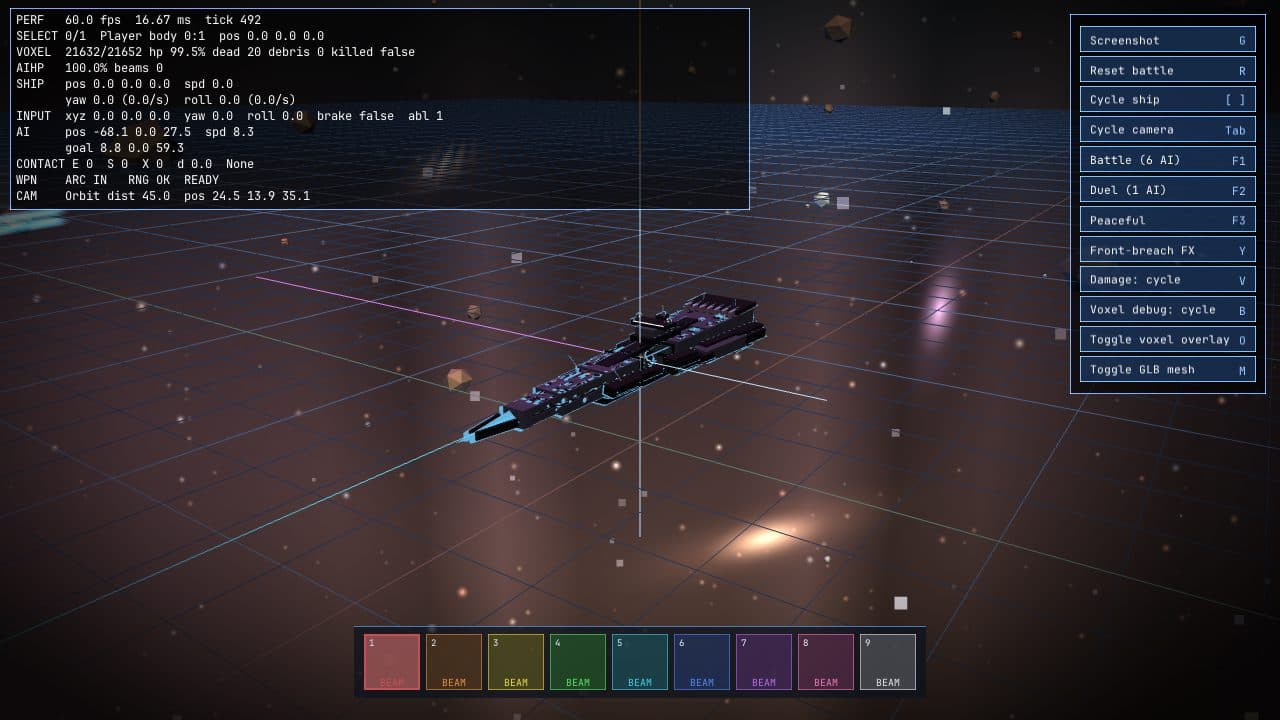
Stopping the world to change one thing
A capital ship is made of a thousand small decisions. How warm the light falls across the hull. How hard a beam bites. How wide the guns swing when the ship turns its flank to you. Every one of those is a feeling I have to find by hand, by nudging a number and looking until it is right.
For a long time, finding it meant stopping the world. I would change one value, then sit in the dark while the whole ship powered down and came back up cold, just to see if I liked it. Ten seconds of nothing. Six minutes to look at three options. Most of my work was waiting for the lights to come back on.
So I stopped killing the ship to tune it. I learned to talk to it while it was still flying.
What it feels like now
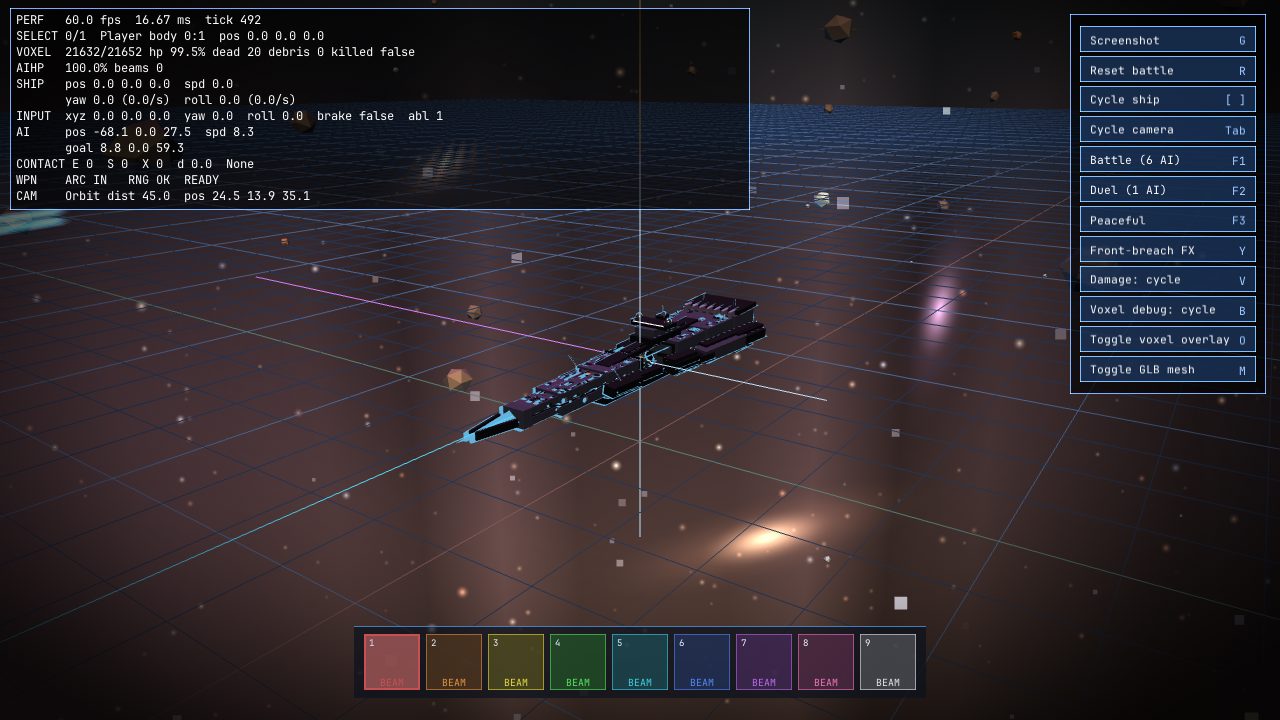 Pulled from a ship that never stopped flying. The same look used to cost ten seconds of staring at black. Now it costs less than a heartbeat.
Here is the trick I love most. I name a single dial and three settings, and the ship runs through them itself, holding still at each one long enough for me to see, then quietly snapping back the way it was. Three looks, side by side, in less time than it takes to say the word "compare."
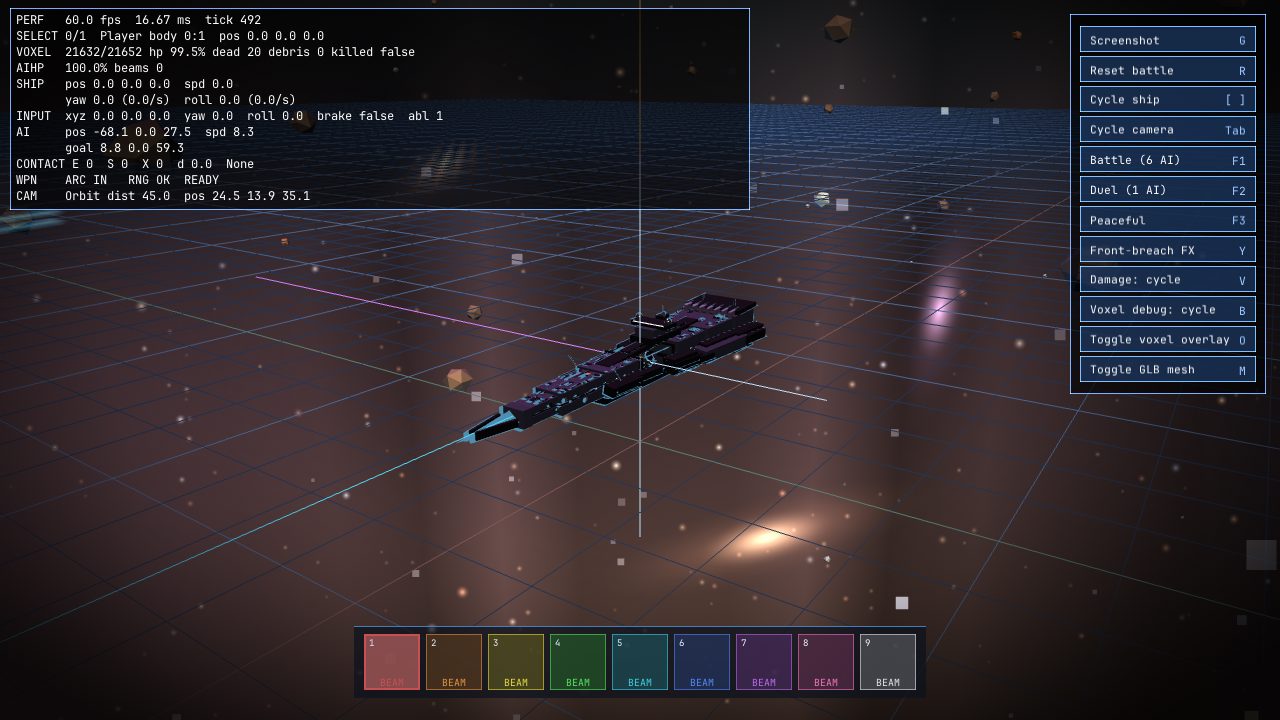 The warm light pulled low. The cold rim takes the ship and it looks adrift.
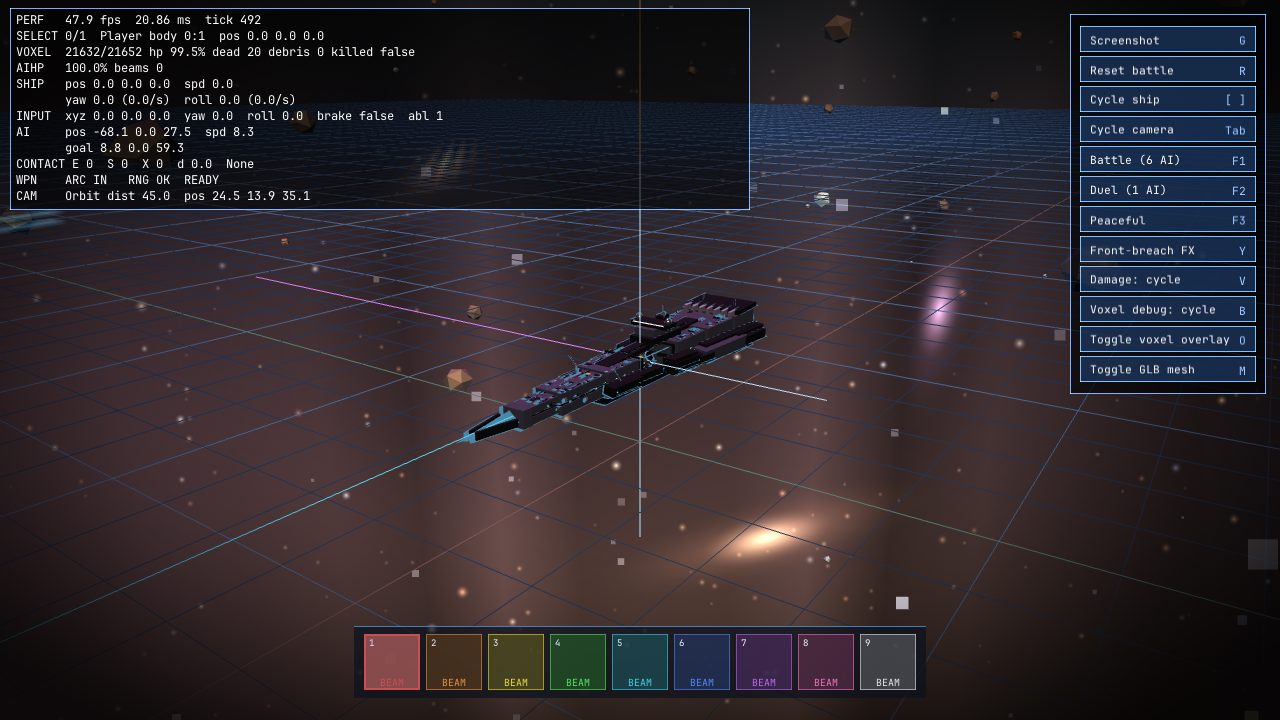 Where the ship lives today. Warm and steady.
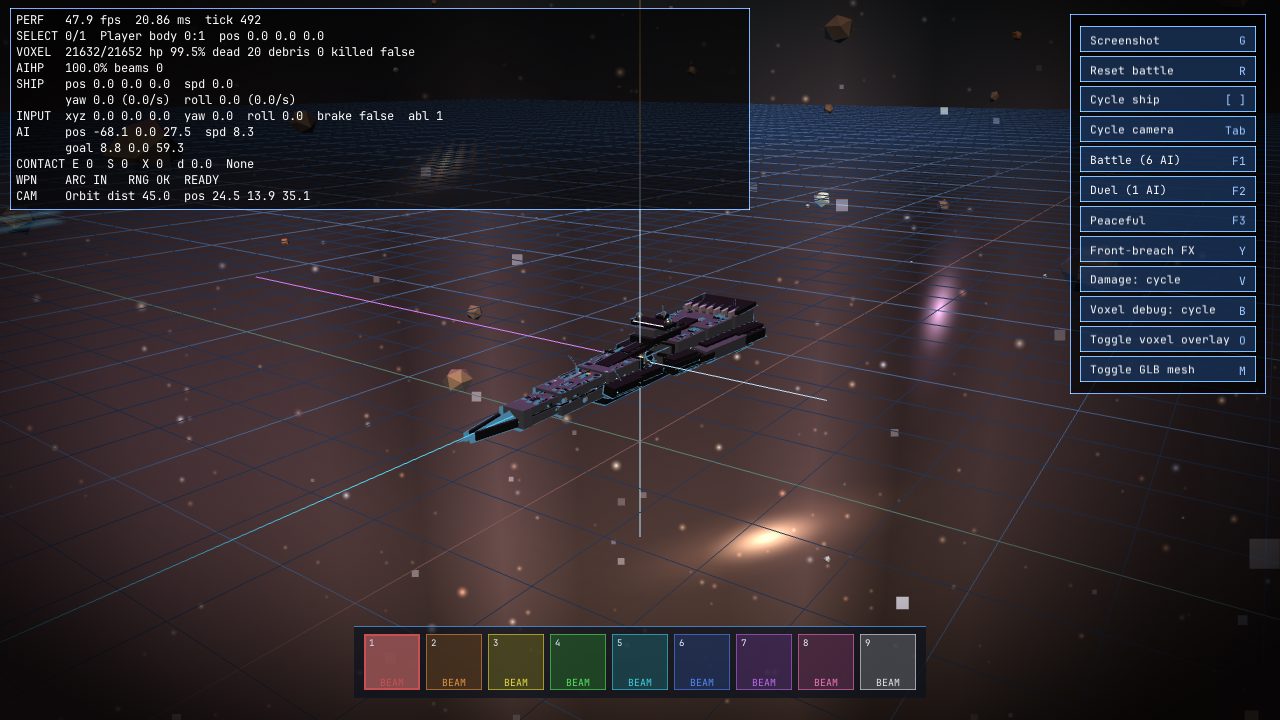 Pushed as far as it goes, so I can feel where too-much begins.
Everyone I have ever sat in front of this asks for the same thing the moment they take the chair: show me a few, let me point at the one I want. I could never give them that before. Now it is just how I work.
The lie the ship was telling me
While I was learning to talk to it, the ship told on itself. I would set the brightness of the whole scene, and a breath later it would creep back, like someone was rubbing out my change the instant I made it. I sat there and watched it happen twice before I believed it.
It was real. Something deep in the ship was quietly resetting that one dial over and over, smothering every adjustment before I could see it. And here is the part that got under my skin: until I could ask the living ship "what did I just change," and hear it answer "nothing," that little theft was invisible. It had probably been swallowing my tweaks for ages.
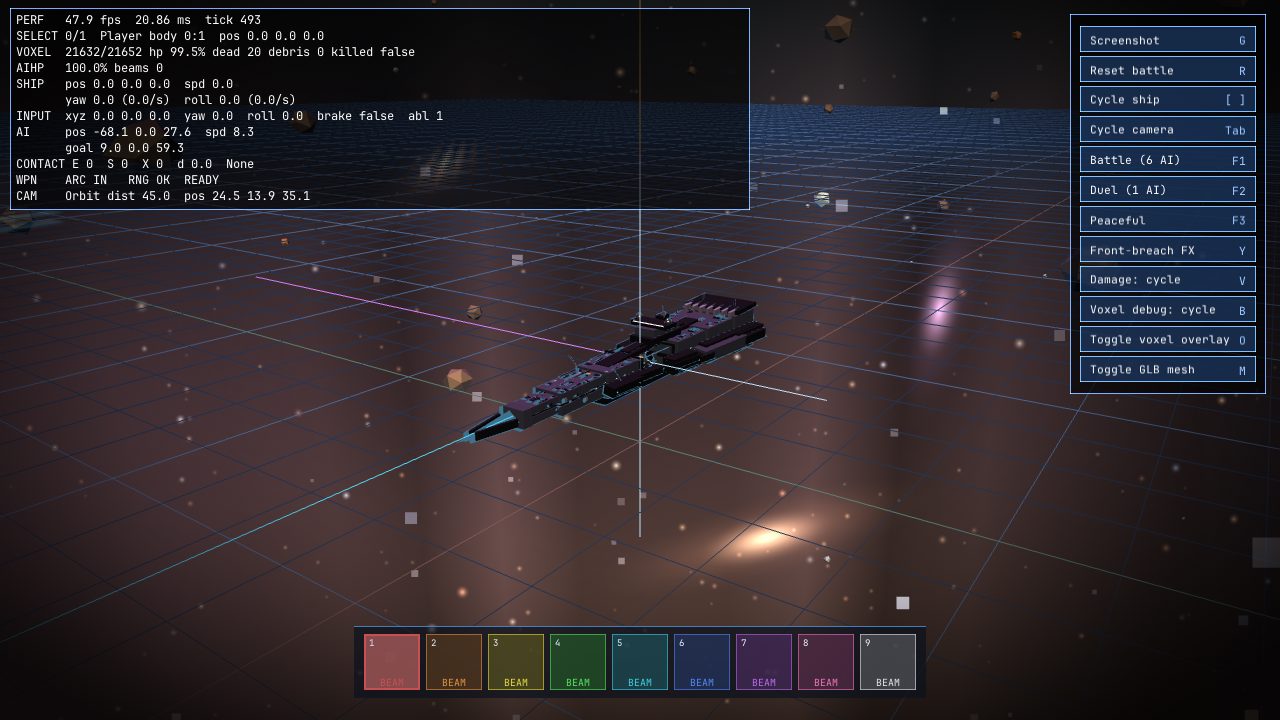 The light pulled down low.
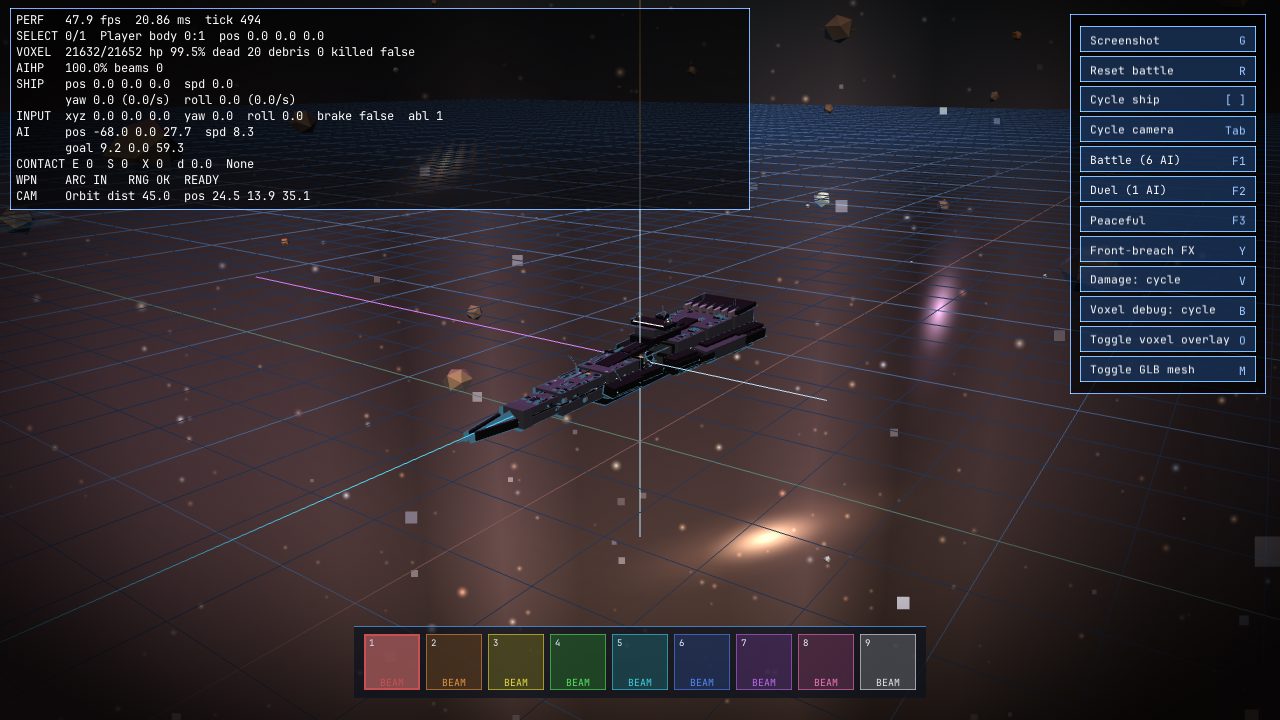 The light pushed up hot.
I caught the thief that same afternoon. But the thing I want to carry forward is humbler than the fix: I had been blind, and I had not known it. The ship had been eating my decisions and smiling, and I had been thanking it.
Three lines I will not cross
Reaching into a living thing is powerful enough to be dangerous, so before I let myself enjoy it I drew three lines.
The first: none of this whispering follows the ship into the wild. When a player flies it, the chair I tune from is simply gone. There is no secret hand left inside the ship.
The second: the ship knows which dials are safe to turn and which ones change the truth of a fight. Brightness is only a mood. Beam damage is the bones of a battle. It will let me play with the mood freely, but it guards the bones, so a saved fight stays an honest record of what happened.
The third, and the one I am proudest of: playing is not deciding. I can sit for an hour trying fifty settings, and not one of them is real until I say so out loud. Idle daydreaming never sneaks its way into the ship for keeps. That takes a deliberate yes.
Conjuring a fight out of nothing
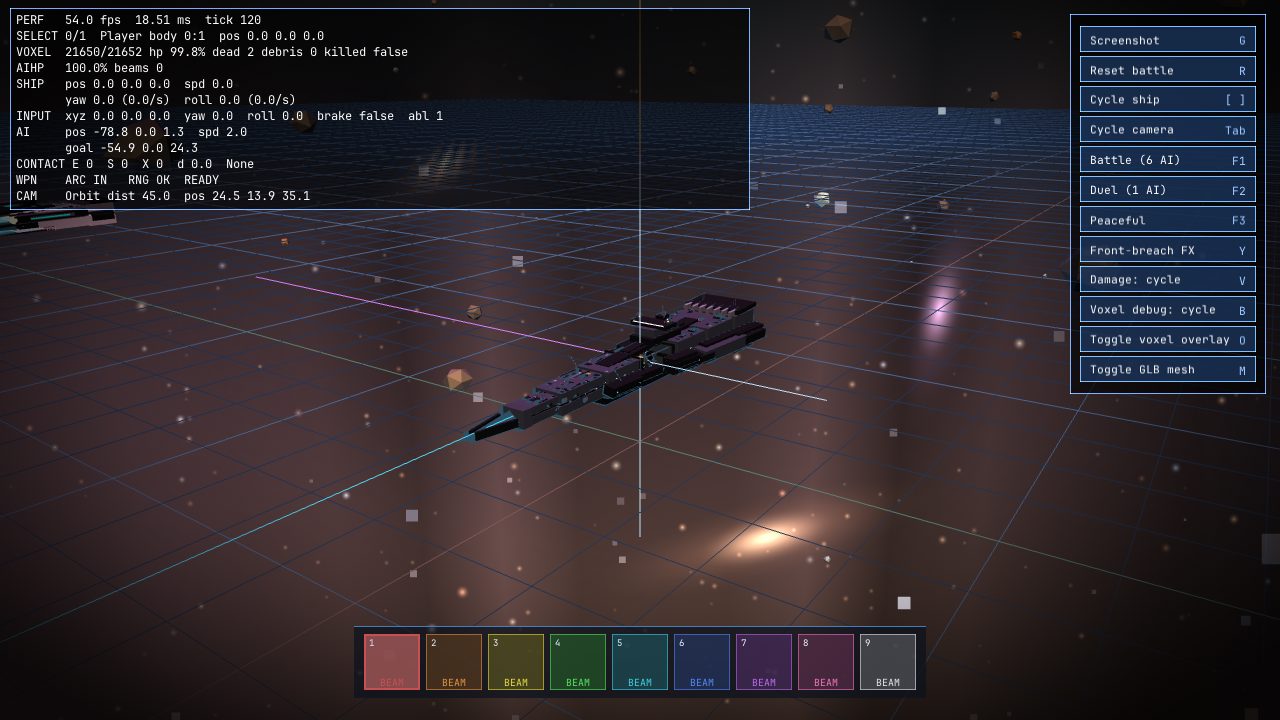 A duel pulled out of empty space. Two ships set down, the dice locked, the fight let loose, the moment caught.
I can also conjure a whole battle on a whim. Put two ships there, lock the dice so the same fight happens every time, and let them tear at each other for a few seconds. The whole thing blooms in under two breaths. For balancing a fight, that was the missing thing. I can ask "if this beam bit a little harder, would the duel end any differently," and the same ships will answer me before the question has cooled.
What it really bought me
The lesson I want to keep is small and a little smug: a tool that respects the right lines can reach so much further than a timid one ever could. Inside those three lines, almost every dial on the ship is mine to play with, and none of my play can hurt the real thing.
But the lines are not the point. The point is that the ship is awake now while I work on it. I no longer reach into a corpse and wait to see if it comes back beautiful. I reach into something flying, turn my hand a quarter degree, and the hundred-meter mass answers me in the same instant, the stars still wheeling slow past its bow. For the first time, tuning this thing feels less like building a ship and more like standing on the bridge of one, learning what it wants to be.